
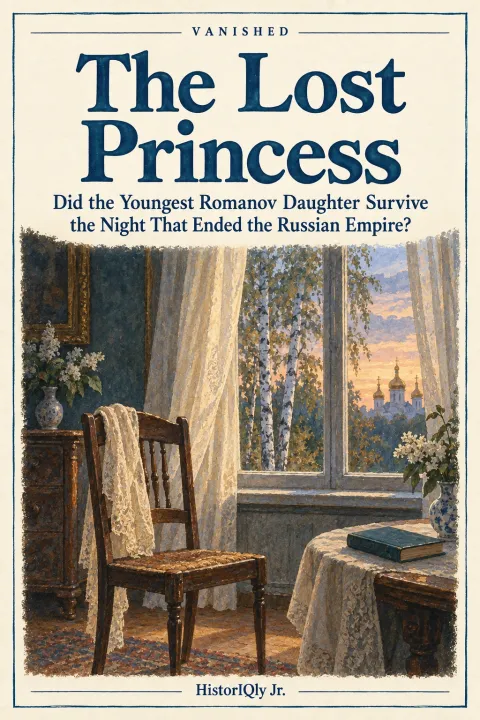
The Lost Princess
Did the Youngest Romanov Daughter Survive the Night That Ended the Russian Empire?
In July 1918, the Romanov family was held under guard in Yekaterinburg. On the night of July 16–17, the family and four attendants were taken to a basement and killed. Later accounts describe the events, but do not give us access to everyone’s private thoughts.
The Romanov family — the Tsar, his Empress, and their five children — were led to a basement. They did not come back out.
The Bolsheviks hid the bodies in secret. For the next seven decades, no one knew where. And without a grave, the world could not be certain what had happened.
Into that uncertainty, a rumour grew: the youngest princess had survived.
Anastasia Romanova
Youngest daughter of Tsar Nicholas II and Empress Alexandra. Born June 18, 1901. Known inside the palace for her pranks, her sharp wit, and her close bond with her brother Alexei. She was seventeen years old on the night of July 17, 1918.
Anna Anderson
A mystery woman who appeared in Berlin in 1920 and claimed to be Anastasia. She maintained the claim for 64 years. DNA testing in 1994 confirmed she was Franziska Schanzkowska, a Polish factory worker.
Found 1979
Located secretly by geologist Alexander Avdonin in 1979. Officially excavated in 1991. Nine of eleven expected sets of remains were found — two were missing.
2009 all seven confirmed
A second burial site, found in 2007, contained a son and another daughter of Nicholas and Alexandra. Together the two graves account for all five children; assigning the younger daughters to particular graves is a separate question.
The Evidence
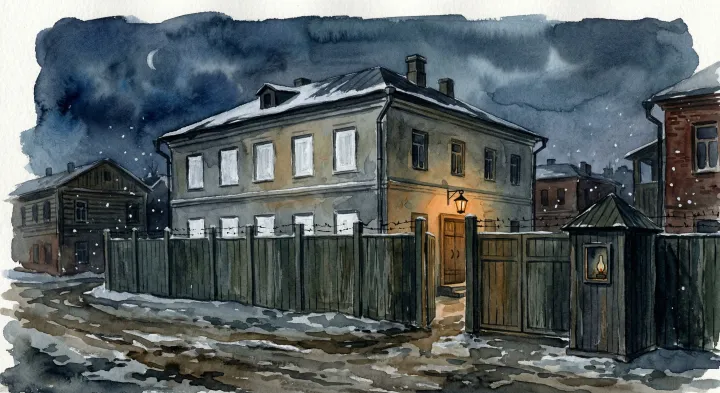
Yurovsky's Report
In 1920, Yakov Yurovsky — the man who led the events in the basement — wrote a detailed personal account of what happened and where the bodies were buried. He gave it to the Bolshevik leadership. It was kept classified until 1989, when the Soviet Union was collapsing. The report became the key that allowed investigators to find the grave.

Testing Genetic Evidence
An imagined genetics laboratory preparing samples. Identification depends on comparing genetic evidence, not seeing someone’s identity through a microscope; no Romanov test result is pictured.
British scientist Dr. Peter Gill compared DNA from the 1991 grave with a sample from Prince Philip — a grandnephew of Empress Alexandra. Five Romanovs were confirmed. Then, in 1994, tissue preserved from Anna Anderson's 1979 surgery was tested. Her DNA matched the Schanzkowski family of Poland — not the Romanovs.
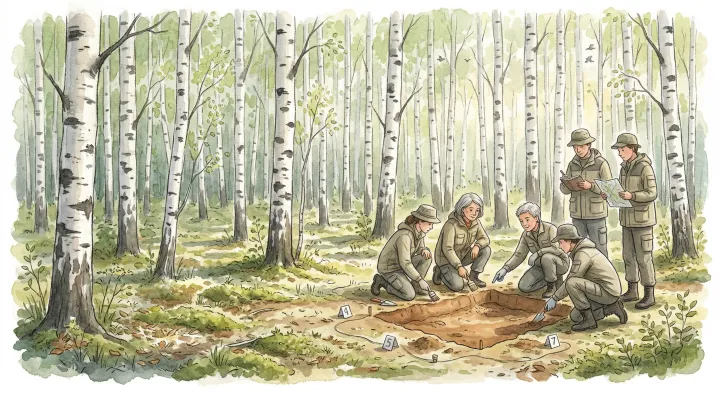
The Second Burial Site (2007–2009)
The second site supplied the missing piece: genetic evidence for the remaining son and daughter. The DNA evidence rules out Anastasia’s survival, without by itself assigning the names Maria and Anastasia to particular sisters’ remains.
What We Know
Anastasia Is Born
Anastasia Nikolaevna Romanova is born at the imperial palace. She is the fourth daughter of Tsar Nicholas II and Empress Alexandra, and would become known in family recollections for her sense of humour.
The Revolution
Tsar Nicholas II abdicates during the February Revolution. The family is placed under guard at the Alexander Palace. The 300-year Romanov dynasty ends in eight days.
Moved to Yekaterinburg
The family is transferred to the Ipatiev House in Yekaterinburg. High wooden fences are erected, the windows painted white. Armed guards are posted at every corner.
The Basement
In July 1918, the Romanov family was held under guard in Yekaterinburg. On the night of July 16–17, the family and four attendants were taken to a basement and killed. Later accounts describe the events, but do not give us access to everyone’s private thoughts.
Anna Anderson Appears
A mystery woman is pulled from a canal in Berlin. She refuses to give her name. Eventually she claims to be Anastasia — and begins a claim she will maintain for 64 years.
The Grave Is Opened
The primary burial site outside Yekaterinburg is officially excavated. Nine sets of remains are found — two are missing. The world's attention returns to the question: did Anastasia survive?
DNA Testing Begins
Dr. Peter Gill's team identifies five Romanovs from the grave. Then Anna Anderson's preserved tissue is tested — and she is confirmed as Franziska Schanzkowska, a Polish factory worker who had disappeared from Berlin in 1920.
All Seven Confirmed
Analysis of the second burial site accounts for the remaining Romanov children. Across both graves, all seven family members are represented. Anastasia did not escape.
The People in This Story
Anastasia Romanova
Born June 18, 1901. Youngest daughter of Tsar Nicholas II. Known for her pranks, her sense of humour, and her close bond with her brother Alexei. She was seventeen years old in July 1918. DNA analysis confirms she died that night in Yekaterinburg.
Anna Anderson
A mystery woman who appeared in Berlin in 1920 and claimed to be Anastasia for the rest of her life. She died in 1984 still fighting for recognition. DNA testing in 1994 identified her as Franziska Schanzkowska — a Polish factory worker who had disappeared from Berlin in the same year Anna Anderson appeared.
Dr. Peter Gill
British forensic scientist who led the DNA analysis of the Romanov remains in 1993. His team used mitochondrial DNA — matched against a sample from Prince Philip, a living relative of Empress Alexandra — to identify five of the seven Romanov family members. The techniques he developed became standard tools in forensic investigation worldwide.

The Question That Remains
Genetic evidence from the two graves accounts for the parents and all five children. Testing also excluded Anna Anderson as a Romanov.
Anderson’s supporters pointed to supposed private knowledge and resemblances. Such claims need to be checked against records: what was documented before publicity and visitors could supply information? They do not outweigh the genetic evidence.
The full book follows the key clues and competing explanations — from the basement in 1918 to the DNA laboratory in 1994 — and then asks you to decide: what can the evidence tell us about Anderson, and what remains unknown about her motives?
Get the Full Book
The complete Lost Princess mystery. 9 chapters of evidence, theories, and a question only you can answer.
Part of the Vanished Volume
Ships found empty at sea. Explorers who never came home. Settlements whose people moved on, leaving questions behind. The clues are still out there.
See all books in this volume →Keep investigating
Check the evidence
What the evidence supports
DNA studies identified the missing Romanov children as Alexei and one of his sisters, completing the family group.
Where to be careful
Researchers differed over which sister was in the second grave. That naming question does not support a surviving Anastasia.
Explore the sources
These selected sources support this guide and offer further reading. Some are written for adults; explore them with a parent or teacher.
The story and illustrations are modern retellings. Imagined scene details are not historical evidence. These sources are a starting point, not citations for every narrative detail.
Evidence guide reviewed 8 September 2026.