
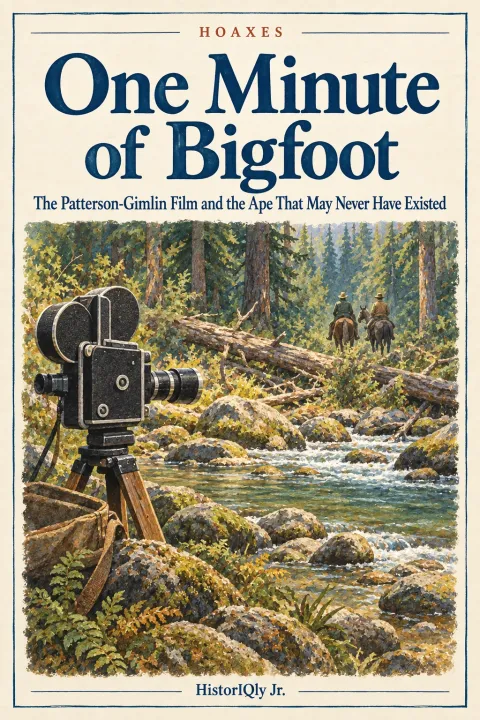
One Minute of Bigfoot
The Patterson-Gimlin Film and the Ape That May Never Have Existed
On 20 October 1967, two cowboys on horseback rode into a remote creek bed in northern California. One of them carried a rented movie camera. What he filmed that afternoon lasts less than sixty seconds.
It shows a tall, dark, ape-like creature covered in hair, walking upright across a sandbar. Halfway through, it turns and looks directly at the camera.
The figure’s identity remains disputed. Limited film detail makes confident anatomical claims difficult, and the footage has not established an unknown species.
Frame 352
The most famous frame in the Patterson-Gimlin film. The creature turns its upper body and looks back over its right shoulder at the camera. This single image has been measured, enhanced, and argued over for more than fifty years.
59.5 sec
Less than one minute of 16mm Kodak colour film.
14.5 in
The length of the footprints found at the scene. More than twice the size of an average human foot.
7+ feet
The creature's estimated height, calculated from trees and landmarks in the film.
The Evidence
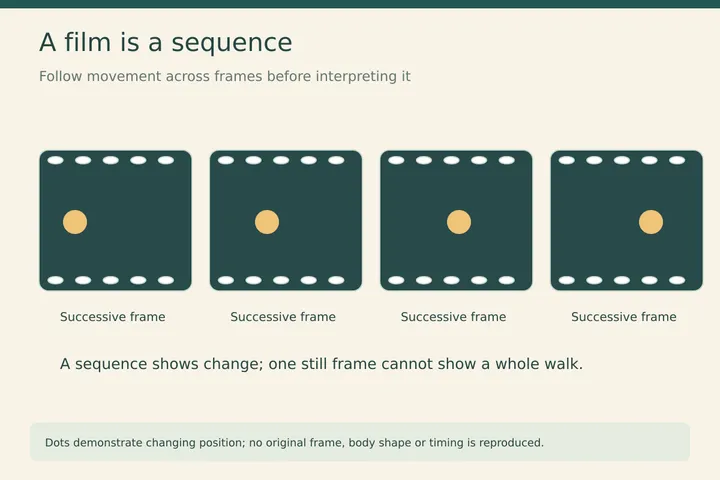
A film is a sequence
Follow movement across frames before interpreting it. Dots demonstrate changing position; no original frame, body shape or timing is reproduced.
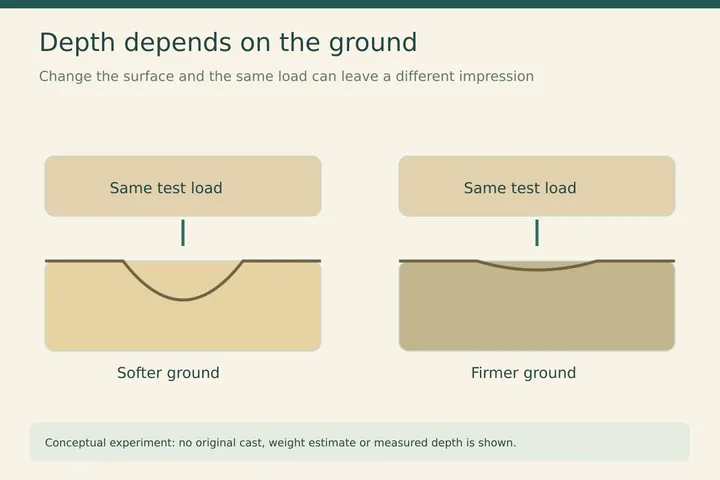
Depth depends on the ground
Change the surface and the same load can leave a different impression. Conceptual experiment: no original cast, weight estimate or measured depth is shown.
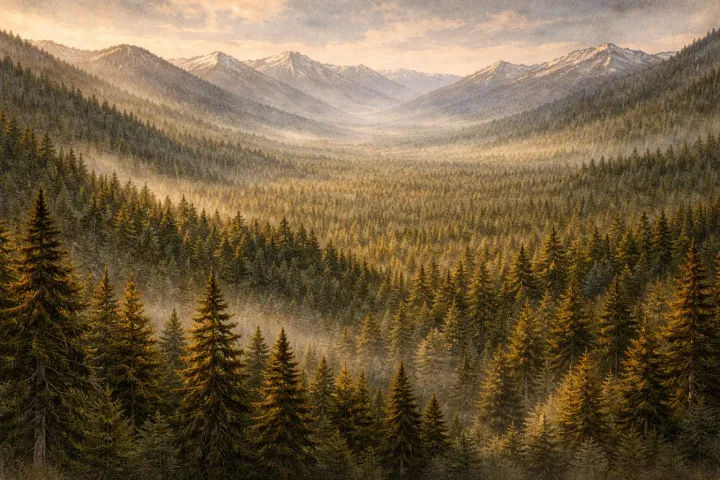
The Location
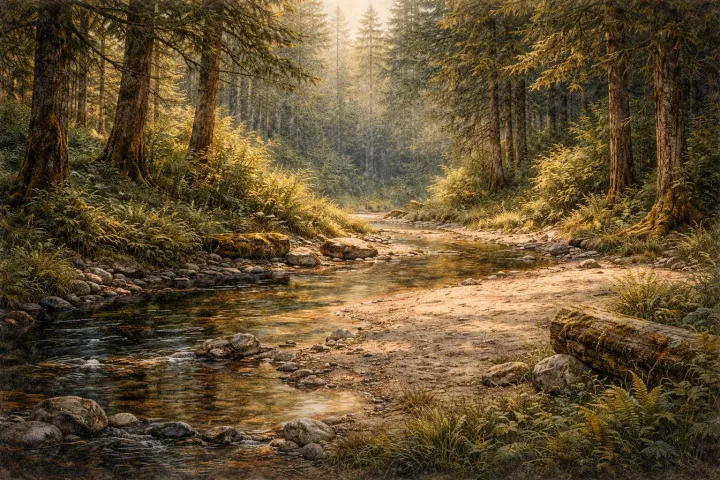
Bluff Creek was remote, but Patterson brought a camera to record his search. The setting could also provide privacy for staging a scene. Remoteness alone does not settle the question.
How the Story Unfolded
Indigenous Accounts
For thousands of years, Pacific Northwest peoples describe Sasquatch — enormous, shy beings living deep in the forests. These are not fairy tales but specific, consistent accounts.
The Name "Bigfoot"
Jerry Crew finds enormous footprints near Bluff Creek. A newspaper coins the name "Bigfoot." The mystery goes national.
The Film
Roger Patterson and Bob Gimlin film a large bipedal creature at Bluff Creek. The footage lasts 59.5 seconds. It will become the most analysed film in cryptozoology.
Patterson Dies
Roger Patterson dies of cancer at age 38. On his deathbed, he insists the film is real. He never confesses to a hoax.
The Costume Claim
Costume maker Philip Morris claims he sold Patterson a gorilla suit. He produces no records of the sale. The suit is never found.
The Man in the Suit?
Bob Heironimus claims Patterson paid him to wear the costume and walk across the clearing. Researchers find inconsistencies in his story. The debate continues.
Still Unsolved
After 50+ years of digital analysis, biomechanics studies, and DNA surveys, the Patterson-Gimlin film has never been conclusively proven real or fake.
The People in This Story
Roger Patterson
A rodeo rider and self-taught naturalist from Yakima, Washington. He spent years searching for Bigfoot and borrowed a camera to film the expedition. He died of cancer in 1972, insisting the film was real.
Bob Gimlin
Patterson’s companion on the trip, who continued to defend their account. His testimony matters as a witness claim; it does not independently identify the filmed figure.
Bob Heironimus
A Yakima local who claimed in 2004 that Patterson paid him $1,000 to wear a gorilla suit for the film. He could not produce the suit, and some of his details did not match the evidence.
The Question That Remains
Several people have claimed involvement in a hoax, but the details remain disputed. The lack of a recovered costume does not verify an unknown animal; independent biological evidence would be needed.
Was the creature at Bluff Creek a real, undiscovered animal — or the greatest costume ever worn? And which is harder to believe?
Read the full book to investigate the key clues and competing explanations — then decide for yourself.
Get the Full Book
The complete Bigfoot mystery. 9 chapters of evidence, theories, and a question only you can answer.
Part of the Hoaxes Volume
From fake fossils to trick photographs, we investigate the greatest hoaxes in history — and ask how clever people were fooled for so long.
See all books in this volume →Keep investigating
Check the evidence
What the evidence supports
The Patterson–Gimlin film is a real film whose subject is disputed. The FBI’s separate examination of alleged Bigfoot hairs identified deer-family hairs.
Where to be careful
That hair test was not a test of the film. Uncertainty about a blurry image is not positive evidence for an undiscovered species.
Explore the sources
These selected sources support this guide and offer further reading. Some are written for adults; explore them with a parent or teacher.
The story and illustrations are modern retellings. Imagined scene details are not historical evidence. These sources are a starting point, not citations for every narrative detail.
Evidence guide reviewed 8 September 2026.