
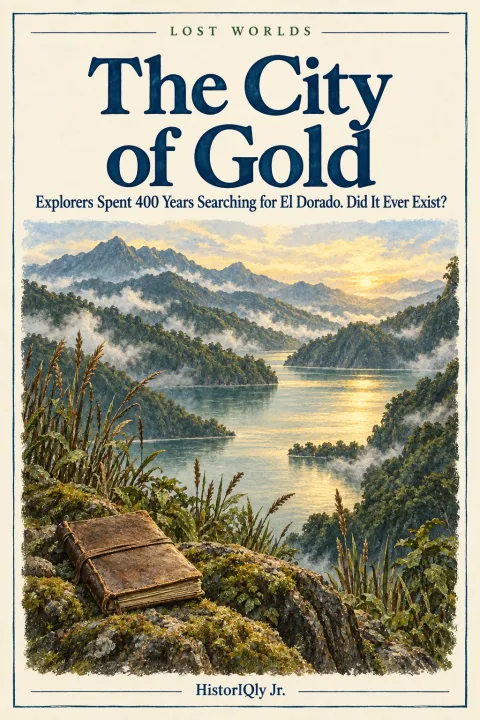
The City of Gold
Explorers Spent 400 Years Searching for El Dorado. Did It Ever Exist?
In a reconstruction based on colonial accounts, on a lake high in the mountains of Colombia, a chief covered in gold dust stepped onto a wooden raft. He dived in. The gold washed off his skin and sank. His attendants threw golden offerings into the water after him. It was a gift to the gods.
Spanish conquistadors heard this story and imagined something far bigger: a city made entirely of gold. For four hundred years, explorers searched for El Dorado. Thousands died. Entire expeditions vanished. The city was never found.
The ceremony was real. The city was not. But the line between them launched one of the greatest treasure hunts in history.
400 Years
From the 1530s to the 1900s, explorers from Spain, England, Germany, and beyond searched for El Dorado across millions of square kilometres of South American jungle, mountain, and river. Nobody ever found a golden city.
55,000+
A collection of metalwork and other Colombian objects; not all are gold.
3,000 m
Lake Guatavita sits high in the Colombian Andes — a sacred site now protected by law.
1969
The Muisca Raft — a golden sculpture of the ceremony — was found in a cave, supporting a ritual interpretation.
The Evidence
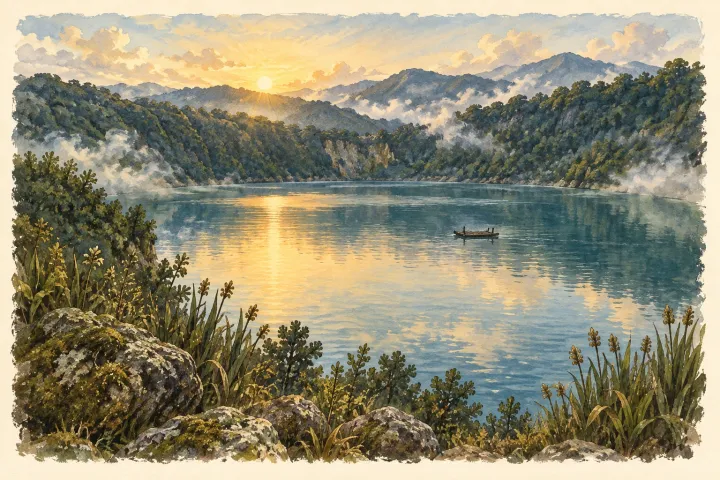
The Golden Ceremony
The Muisca coronation ritual: a new chief was covered in gold dust, placed on a raft, and dived into Lake Guatavita. Gold offerings were thrown in after him. This ceremony was the origin of the El Dorado legend.
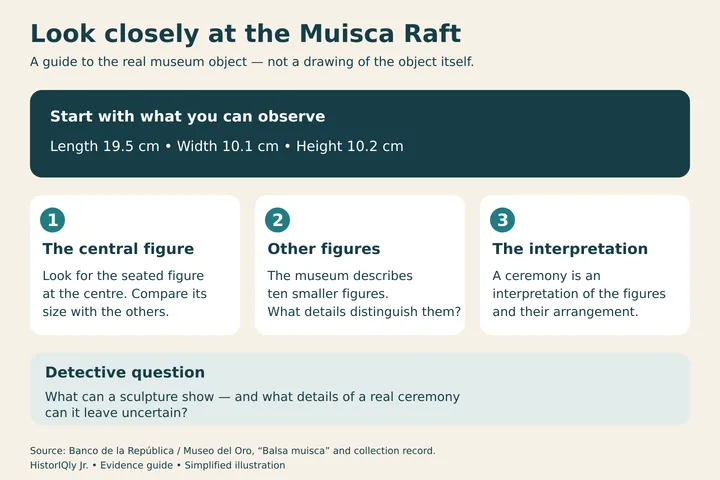
The Muisca Raft
A gold-alloy sculpture found in 1969 near Pasca, Colombia. It depicts the El Dorado ceremony — the tall central figure is the chief, surrounded by attendants. An important Muisca representation interpreted in connection with investiture rituals.
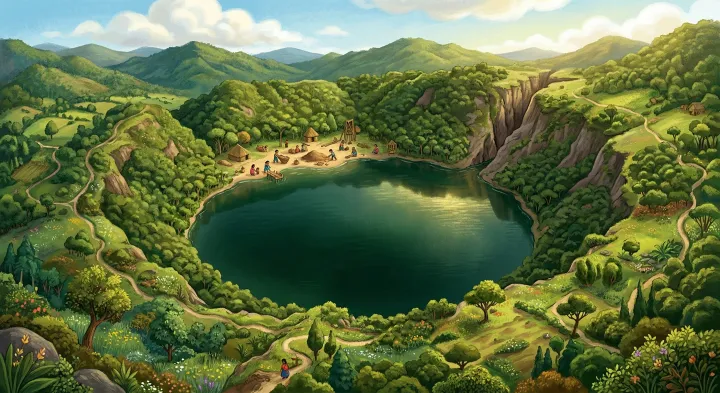
Lake Guatavita
A nearly circular lake in the Colombian highlands, 3,000 metres above sea level. Repeated drainage attempts found gold offerings — supporting evidence of ritual offerings. Protected by the Colombian government since 1965.
400 Years of Searching
The Conquest
Gonzalo Jiménez de Quesada reaches the Muisca highlands after a disastrous jungle trek. Fewer than 200 of his 800 soldiers survive the journey. He conquers the Muisca and hears about the golden ceremony.
Pizarro's Expedition
Gonzalo Pizarro launches a massive expedition into the Amazon. Thousands of indigenous porters die. His officer Orellana splits off and follows the Amazon downstream to the Atlantic.
First Drainage Attempt
Hernán Pérez de Quesada organises workers to bail water from Lake Guatavita using gourds. The water drops three metres. Gold is found at the edges — proving the ceremony stories are true.
Raleigh's First Voyage
Sir Walter Raleigh sails to South America to find El Dorado. He explores the Orinoco River region, finds no golden city, and writes a bestselling book claiming it was still out there.
The Big Drain
A British company tunnels into the hillside to drain Lake Guatavita completely. The mud hardens like concrete in the sun. They recover a few gold objects but go bankrupt.
The Muisca Raft Found
Farmers discover a golden sculpture of the El Dorado ceremony in a cave near Pasca. It becomes the most famous object in the Museo del Oro and evidence for its ritual interpretation.
The People in This Story
Gonzalo Jiménez de Quesada
A Spanish lawyer turned conquistador. He led a brutal expedition through the Colombian jungle, conquered the Muisca, and founded Bogotá. He later led an unsuccessful expedition in search of El Dorado.
Sir Walter Raleigh
English soldier, poet, and favourite of Queen Elizabeth I. He searched for El Dorado twice (1595, 1617), wrote a bestselling book about it, and was executed after the failed expedition and a clash with Spanish forces; his fate involved an earlier sentence and royal politics.
The Golden Chief
The original "El Dorado" — the Muisca Zipa who was covered in gold dust during the coronation ceremony at Lake Guatavita. His name is lost to history, but his ceremony changed the world.

The Question That Remains
The raft and colonial accounts support a ritual connection, though the sculpture cannot confirm every narrated detail. Gold was found in Lake Guatavita. But the city of gold — streets paved in gold, temples of gold — was never found anywhere.
Was El Dorado simply a misunderstanding — a real ceremony exaggerated beyond recognition? Or was the legend kept alive on purpose, by people who needed a golden city to exist whether it was real or not?
Read the full book to investigate the key clues and competing explanations — then decide for yourself.
Get the Full Book
The complete El Dorado mystery. 9 chapters of evidence, theories, and a question only you can answer.
Part of the Lost Worlds Volume
Ancient cities, remarkable structures, and the communities who built them. Explore the evidence and the living histories behind the ruins.
See all books in this volume →Keep investigating
Check the evidence
What the evidence supports
Muisca goldwork and offering practices are real. The Muisca raft is associated with the ceremony behind the El Dorado legend.
Where to be careful
That evidence does not establish a city made of gold. Colonial accounts also reflect the expectations and interests of their writers.
Explore the sources
These selected sources support this guide and offer further reading. Some are written for adults; explore them with a parent or teacher.
The story and illustrations are modern retellings. Imagined scene details are not historical evidence. These sources are a starting point, not citations for every narrative detail.
Evidence guide reviewed 8 September 2026.