
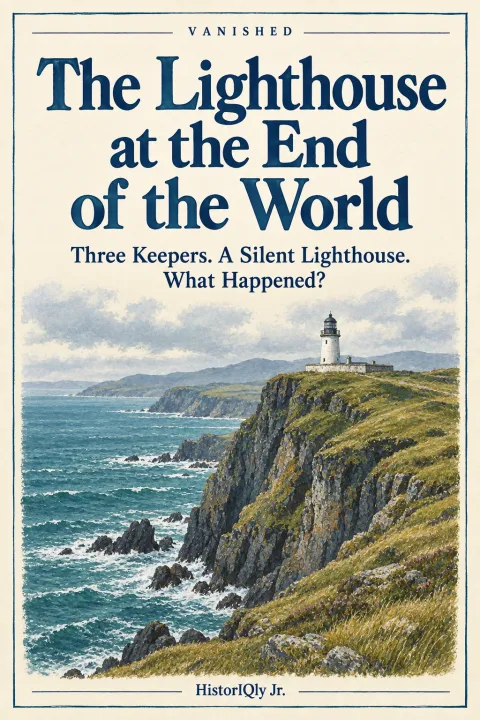
The Lighthouse at the End of the World
Three Keepers. A Silent Lighthouse. What Happened?
On the 26th of December, 1900, a supply ship called the Hesperus arrived at a lighthouse on Eilean Mòr — a remote Scottish island twenty miles from the nearest coast. Relief keeper Joseph Moore rowed ashore. He knocked on the lighthouse door. No answer. He pushed it open.
The clocks had stopped. The keepers were missing. The famous interrupted-meal scene was added in later storytelling; it is not a recorded clue.
Three experienced lighthouse keepers had simply ceased to exist.
Eilean Mòr, Flannan Isles
A cluster of rocky islands twenty miles west of the Outer Hebrides, Scotland. One of the most remote lighthouse postings in the entire British Isles. The lighthouse had only been open since 1899 — just one year before the keepers vanished. No permanent residents. No shelter from the open Atlantic.
15 Dec
The written log ended on 13 December; notes on a slate extended to the morning of 15 December. A passing ship reported no light that night.
11
The keepers vanished on or around 15 December. The relief ship did not arrive until 26 December — eleven days later.
Wave
Swept away by an exceptionally large wave while checking storm damage on the western landing platform.
The Evidence
The Missing Oilskins
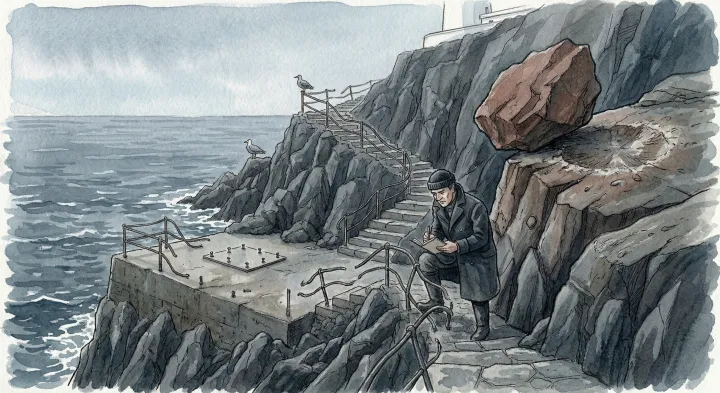
Two of the keepers' heavy waterproof coats were missing from their hooks. The third — belonging to Donald McArthur — was still hanging by the door. An experienced keeper does not go out in Atlantic weather without his oilskin. The coat could fit a hurried departure, but does not prove one.
The Damaged Platform
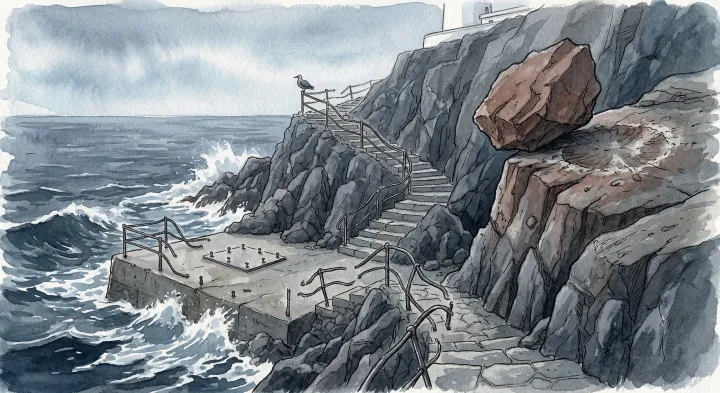
The western landing platform had been devastated. Iron railings were bent outward. A wooden box used to store ropes and gear was missing. A block of stone estimated at over one ton had been displaced from the cliff edge. The damage shows the force the sea could exert at the landing.
The Tidied Kitchen
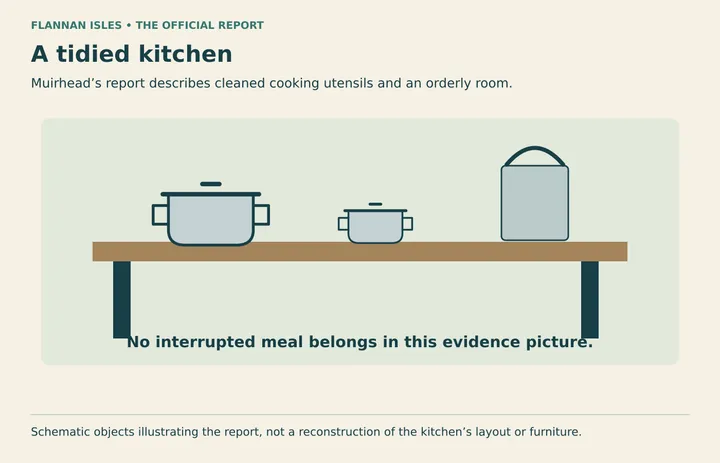
Schematic cooking utensils illustrate Muirhead’s report of a tidied kitchen. There is no interrupted meal, and the drawing does not claim to reproduce the room’s layout.
The lamps had been prepared, but the clocks had stopped. The official records must be distinguished from the meal and overturned-chair details in later retellings.
What We Know
Lighthouse Opens
The new lighthouse on Eilean Mòr opens after years of construction. Every stone was shipped from the mainland. It is one of the most remote postings in the entire lighthouse service.
Keepers Arrive
James Ducat, Thomas Marshall, and Donald McArthur arrive for their rotation. They carry supplies for a month. The relief ship is due back in late December.
Severe Storms
Damage at the western landing showed the power of the sea. The timing of each episode of damage cannot be reconstructed from later dramatic accounts of storms.
Last Log Entry — and Last Light
Notes on the slate record the morning’s observations. A passing ship later reports no light. These clues narrow the timeline without recording the disappearance itself.
Discovery
The Hesperus arrives. Relief keeper Joseph Moore goes ashore and finds the lighthouse empty. He searches the island. He finds no one.
Official Investigation
Superintendent Robert Muirhead arrives to investigate. After a thorough examination, he concludes the men were swept away by an exceptionally large wave while checking the western platform.
A Likely Sea Accident
The damage supports an explanation involving the sea. It does not establish the exact wave or the keepers’ final movements.
The People in This Story
James Ducat
Aged 43. Twenty years in the lighthouse service. He was an experienced keeper known to the investigating superintendent, Robert Muirhead. His oilskin coat was missing, suggesting he had gone outside voluntarily.
Thomas Marshall
Aged 28. Marshall was one of the missing keepers. His oilskin was missing, but that clue does not establish his precise final movements.
Donald McArthur
Aged 40. His oilskin coat was still on its hook — the detail that has puzzled investigators most. He may have left the lighthouse in a hurry, responding to something he saw from inside. He never came back for the coat.
Robert Muirhead
Superintendent of Lighthouses for the Northern Lighthouse Board. He visited the island on 29 December 1900 and concluded that the men had probably been swept away by the sea.
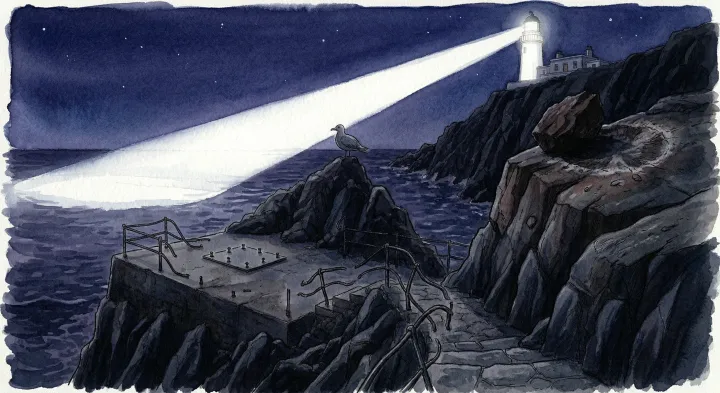
The Question That Remains
A sea accident remains the leading explanation. The physical damage on the western platform is consistent with an enormous wave. The missing oilskins make sense. The orderly interior of the lighthouse makes sense.
But three men vanished without leaving a single word, a single signal, a single clue to what they experienced in their final moments. After more than a hundred and twenty years, nobody has been able to say with certainty exactly what happened on the 15th of December, 1900.
Read the full book to follow every clue — from the keepers' arrival on the island to the discovery of the empty lighthouse — and then weigh what the evidence can establish on Eilean Mòr.
Get the Full Book
The complete Flannan Isles mystery. 9 chapters of evidence, theories, and a question only you can answer.
Part of the Vanished Volume
Ships found empty at sea. Explorers who never came home. Settlements whose people moved on, leaving questions behind. The clues are still out there.
See all books in this volume →Keep investigating
Check the evidence
What the evidence supports
Three keepers were missing when the relief ship arrived on 26 December 1900. The contemporary telegram says the clocks had stopped.
Where to be careful
The familiar interrupted-meal scene belongs to later storytelling. A sea accident is the leading explanation; nobody witnessed the final sequence.
Explore the sources
These selected sources support this guide and offer further reading. Some are written for adults; explore them with a parent or teacher.
- Northern Lighthouse Board: Flannan Islands
- Northern Lighthouse Board: Original telegram and investigation report
The story and illustrations are modern retellings. Imagined scene details are not historical evidence. These sources are a starting point, not citations for every narrative detail.
Evidence guide reviewed 8 September 2026.