
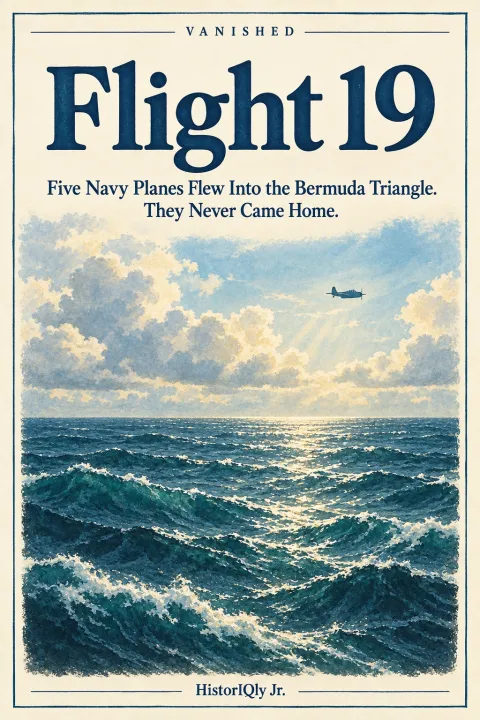
Flight 19
Five Navy Planes Flew Into the Bermuda Triangle. They Never Came Home.
On December 5, 1945, five Navy training aircraft became lost during a navigation exercise from Fort Lauderdale. Radio exchanges show their leader, Lieutenant Charles Taylor, struggling to identify his position. Fourteen men were aboard the five planes.
The Navy launched the largest peacetime search in its history. Twenty-one ships. Hundreds of aircraft. 250,000 square miles of ocean.
They found nothing. Not a wing. Not a life raft. Not a single piece of wreckage. The mystery has never been solved.
1945
Five TBM Avenger torpedo bombers took off from Fort Lauderdale on a routine two-hour navigation exercise. Their leader reported trouble with his compasses. He became convinced he was flying toward Florida. The available evidence places the flight east of Florida later that afternoon. Fourteen men never returned.
27
14 from Flight 19. 13 from the rescue Mariner. All in a single evening.
250,000 sq mi
One of the largest peacetime search operations in US Navy history. Nothing was found.
80+ Years
No confirmed wreckage. No survivors. The Navy's verdict: "cause unknown."
The Evidence
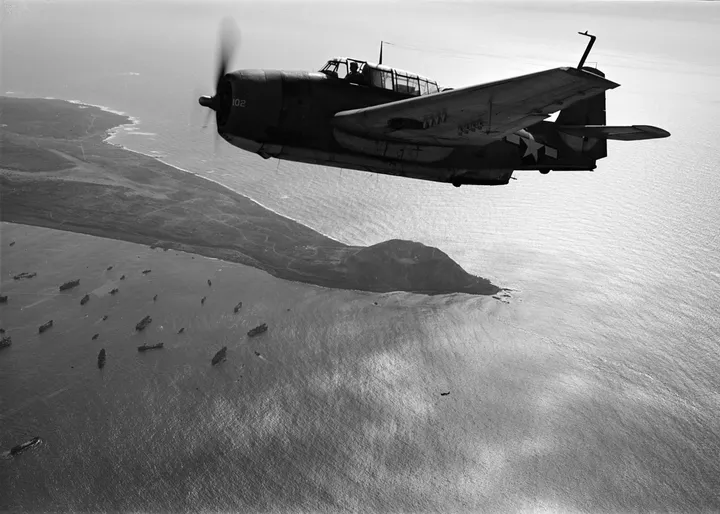
A Real TBM Avenger
A U.S. Navy TBM Avenger over Iwo Jima in March 1945. This is a reference photograph of the aircraft type, not a photograph of Flight 19 or its formation. Photo: U.S. Navy / National Archives, NAID 520733, Public domain — U.S. Navy official photograph; unchanged.

Five TBM Avenger torpedo bombers. Fourteen men. A two-hour training exercise that should have been completely routine. At 2:10 PM they took off in clear weather. Within two hours, their leader reported his compasses had failed and he didn't know where he was.
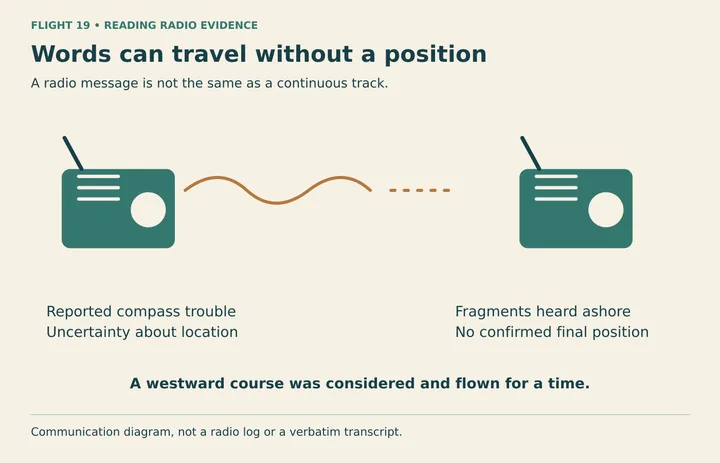
Messages Without a Track
A communication diagram shows why radio reports do not provide a continuous flight path. It contains no invented transcript or logbook.
Radio exchanges record confusion about the flight’s location. Some pilots urged a westward heading, and Taylor did order westward flight for a time. The incomplete record does not establish a continuous, certain route.
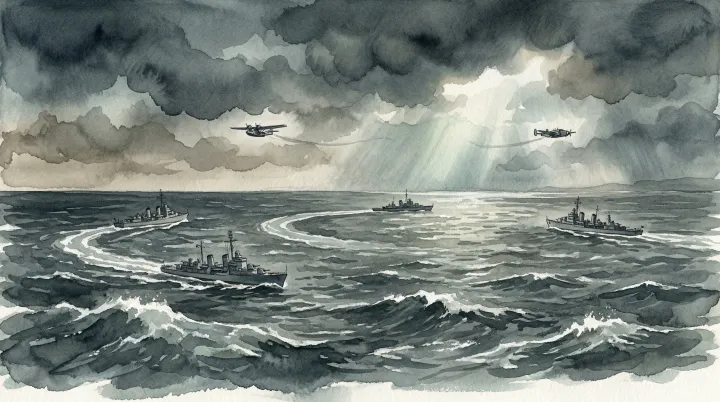
Nothing Found
Five Avengers found underwater in 1991 briefly raised hopes. They were not Flight 19, and their proximity did not establish that they had all crashed together. No wreckage has been positively identified as the missing patrol.
One Evening in December
Takeoff
Flight 19 departs NAS Fort Lauderdale on Navigation Exercise 1. Clear skies, good weather, a simple triangular route. Five planes, fourteen men, two hours of fuel to spare.
Compass Failure
Taylor reports his compasses are giving wrong readings. He believes they are over the Florida Keys — west of Florida. Investigators later placed them east of Florida, probably near the Bahamas at this stage.
"We Are Lost"
Lt. Robert Cox tries to help establish Taylor’s position. Confusion about which islands lay below makes the radio exchanges difficult. The surviving record includes changes of heading.
Rescue Mariner
A PBM Mariner flying boat with 13 crew takes off to search for Flight 19. Twenty-three minutes later it disappears. A passing ship reports an explosion in the sky.
The Search
21 ships, hundreds of aircraft, 250,000 square miles searched. Nothing belonging to Flight 19 is ever found.
Cause Unknown
The Navy inquiry initially blames Taylor, then changes its verdict to "cause unknown" after Taylor's mother protests. The mystery has remained officially unsolved ever since.
The People in This Story
Lt. Charles Taylor
A decorated World War Two combat pilot with over 2,500 hours of flying experience. Recently transferred to Fort Lauderdale, he was less familiar with the local coastline. His reported compass trouble and uncertainty about the coastline complicated navigation.
Lt. Robert Cox
A flight instructor at NAS Fort Lauderdale who first picked up Taylor's distress signal. He tried to help Taylor establish his position and return to land; we cannot know whether any single instruction would have guaranteed survival. Cox maintained radio contact for as long as possible before the planes flew out of range.
The Fourteen Airmen
Pilots, gunners, and radiomen. Some were veterans of the Pacific war. Some were trainees on one of their first exercises. All fourteen stayed in formation, following their flight leader into the dark Atlantic. Their bodies were never recovered.
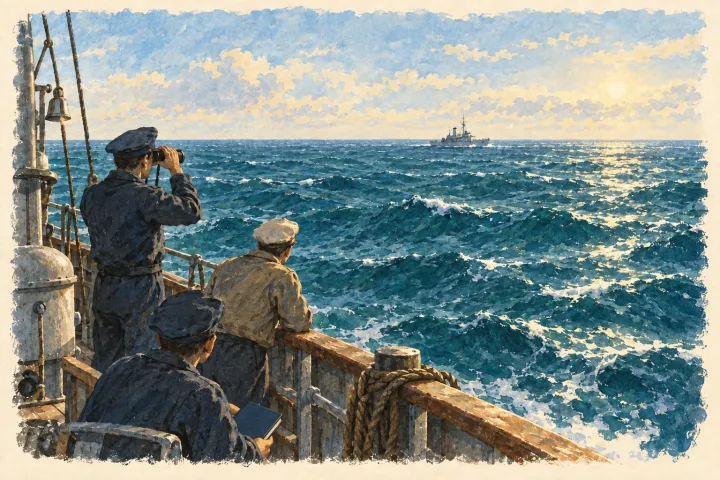
Mistake. Mystery. Or Something Else?
Navigation difficulties, dwindling fuel and worsening weather offer a strong ordinary explanation for the loss. Without the wrecks, investigators cannot reconstruct the final landings or say exactly how quickly individual aircraft sank.
But the evidence is incomplete. No wreckage was ever positively identified. No final position was ever transmitted. The Navy itself refused to settle on a single cause.
Read the full book to examine every clue — then decide what you think really happened.
Get the Full Book
The complete Flight 19 mystery. 9 chapters of evidence, radio transcripts, and a question only you can answer.
Part of the Vanished Volume
Ships found empty at sea. Explorers who never came home. Settlements whose people moved on, leaving questions behind. The clues are still out there.
See all books in this volume →Keep investigating
Check the evidence
What the evidence supports
Five Navy aircraft disappeared during a training flight on 5 December 1945. A search aircraft was also lost.
Where to be careful
The Navy’s account discusses navigation, weather and fuel. Later dramatic radio quotations should be checked against the documented transmissions.
Explore the sources
These selected sources support this guide and offer further reading. Some are written for adults; explore them with a parent or teacher.
The story and illustrations are modern retellings. Imagined scene details are not historical evidence. These sources are a starting point, not citations for every narrative detail.
Evidence guide reviewed 8 September 2026.