
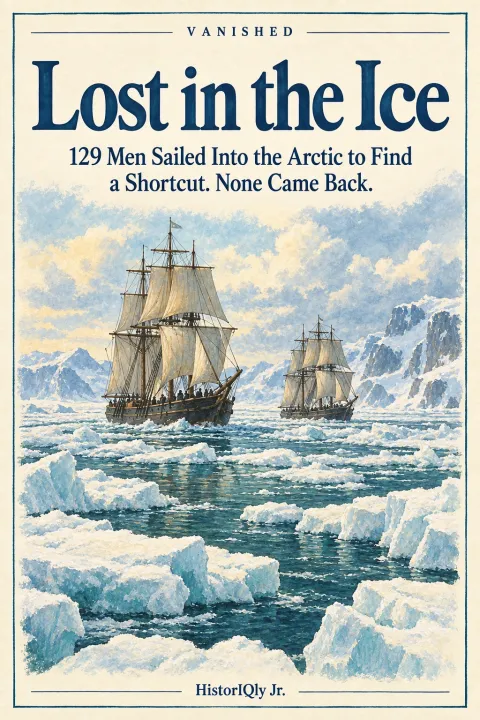
Lost in the Ice
129 Men Sailed Into the Arctic to Find a Shortcut. None Came Back.
In May 1845, Erebus and Terror left England to search for a navigable route through the Arctic. Their reinforced hulls, supplies and small steam engines offered advantages, but could not guarantee passage through heavy sea ice. After several men returned home, 129 continued north.
Whaling crews encountered the expedition in Baffin Bay in July 1845.
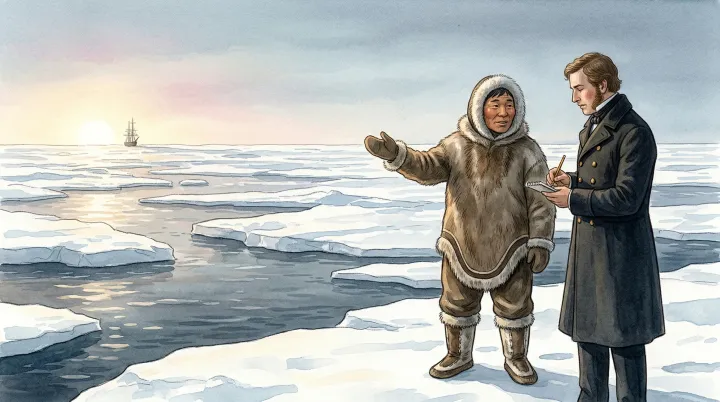
These were its last confirmed encounters with European crews. Inuit witnesses later saw survivors and supplied vital information about their fate.
HMS Erebus & Terror
Two Royal Navy bomb ships, reinforced with iron plating and fitted with steam engines for Arctic conditions. Among the most advanced vessels in the world. Both sank somewhere in the Canadian Arctic. Erebus was found in 2014. Terror in 2016.
Franklin
Sir John Franklin, 59 years old, veteran of three Arctic expeditions. He died on 11 June 1847 — but why remains unknown.
Sep 1846
The ships became locked in ice near King William Island and never broke free.
36 sent
Official and private expeditions searched across the Arctic, gathering objects, documents and Inuit accounts.
The Evidence
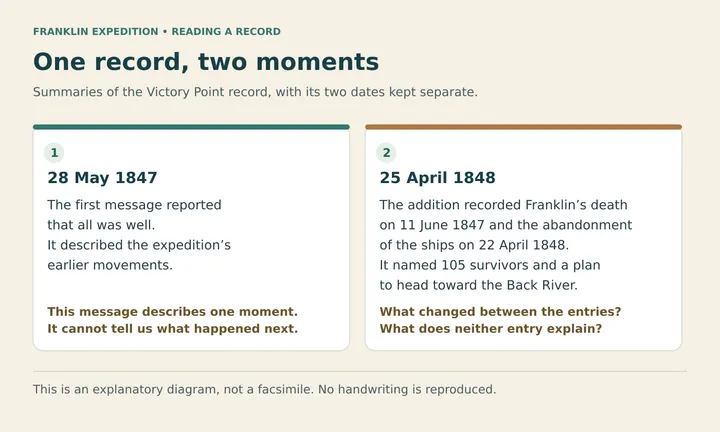
The Victory Point Note
In 1859, members of McClintock’s expedition found the Victory Point record. Its 1847 message reported all well; an 1848 addition recorded Franklin’s death and the departure of 105 survivors. It remains crucial written evidence of the abandonment.
The Skeletal Remains
Human remains found along the retreat route provide evidence of terrible hardship. Cut marks on some bones support Inuit accounts of cannibalism. Lead exposure has also been studied, but newer research does not establish it as the expedition’s main cause of death.
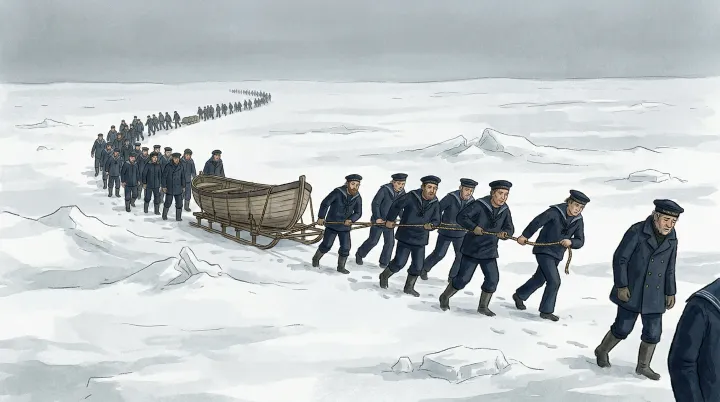
The Abandoned Sledge
A boat mounted on a sledge held supplies, personal objects and human remains. Moving it required enormous effort. The objects raise questions about the retreat, but cannot diagnose the men’s health or explain every decision.
What We Know
Departure
HMS Erebus and Terror leave the Thames. The ships carry enough food for three years, a library of 1,200 books, and a hand organ that plays fifty tunes. The crew expects to be home by 1847.
Last Contact
Two whaling ships spot Erebus and Terror moored to an iceberg in Baffin Bay. The crews exchange pleasantries. Neither side has any reason to worry. The ships disappear into the ice.
The Ice Closes In
The ships become trapped in sea ice off the northwest coast of King William Island. What happened to the ships after abandonment remains under investigation. The men settle in for a second Arctic winter.
Franklin Dies
Sir John Franklin dies on 11 June 1847. No cause is recorded. The later note records twenty-four deaths in total by April 1848. The ships have been stuck in the ice for almost a year.
Ships Abandoned
The 105 surviving men abandon the ships and set out on foot. Their plan: walk 1,000 kilometres to a Hudson's Bay Company outpost. No man makes it. The last survivors are believed to have died near the mouth of the Back River sometime in 1848 or 1849.
The Note
Lieutenant McClintock finds the Victory Point note — a crucial surviving written record from the expedition. It confirms the ships are lost and Franklin is dead, but explains nothing about what really went wrong.
The Ships Found
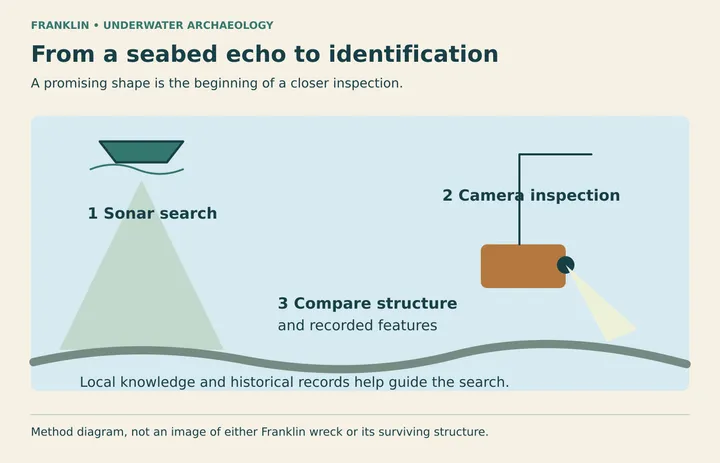
HMS Erebus is discovered on the seabed in September 2014 by a Canadian search involving Inuit knowledge. HMS Terror is found in 2016 after a lead from Inuit hunter Sammy Kogvik — remarkably well preserved, with hatches closed, as though the crew had left in an orderly fashion expecting to return.
The People in This Story
Sir John Franklin
Aged 59 at departure. A veteran of three previous Arctic expeditions and the Napoleonic Wars. Known and celebrated across Britain. Died on 11 June 1847; the cause is not established. His body has never been confirmed found.
Lady Jane Franklin
Franklin's wife refused to accept he was dead. She helped finance five search ships between 1850 and 1857, wrote to presidents, prime ministers, and the Tsar of Russia, and campaigned for years to have her husband declared a hero. It was largely thanks to her that the world kept looking.
Inuit Eyewitnesses
Inuit people living in the area saw the survivors — gaunt men dragging a boat across the ice, making gestures suggesting they were starving. For years, British authorities dismissed these accounts. They turned out to be the most accurate information anyone had.
The Question That Remains
The ships have been found. The note has been read. The bones have been studied. Scientists have measured the lead in the teeth of the dead. And still, after 180 years, nobody agrees on exactly what went wrong.
How did cold, hunger, disease and the difficulty of travelling across the ice combine? Which questions can the wrecks answer, and which still depend on incomplete records?
The full book follows every clue from the day the ships left London through the surviving records and modern discoveries. Then it asks you to decide what really happened.
Get the Full Book
The complete Lost in the Ice mystery. Follow the evidence from 1845 to the moment the ships were found on the ocean floor — and weigh the evidence about the expedition’s fate.
Part of the Vanished Volume
Ships found empty at sea. Explorers who never came home. Settlements whose people moved on, leaving questions behind. The clues are still out there.
See all books in this volume →Keep investigating
Check the evidence
What the evidence supports
The expedition’s ships became trapped in Arctic ice. Evidence includes written records, human remains, Inuit knowledge and the wrecks.
Where to be careful
Lead exposure does not by itself prove fatal lead poisoning. A 2018 study did not support unusually high exposure as the decisive cause of the disaster.
Explore the sources
These selected sources support this guide and offer further reading. Some are written for adults; explore them with a parent or teacher.
The story and illustrations are modern retellings. Imagined scene details are not historical evidence. These sources are a starting point, not citations for every narrative detail.
Evidence guide reviewed 8 September 2026.