
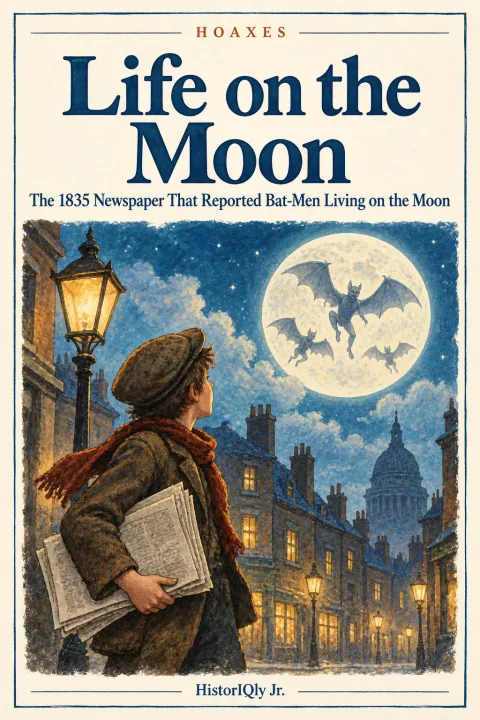
Life on the Moon
The 1835 Newspaper That Reported Bat-Men Living on the Moon
In August 1835, a New York newspaper announced that a famous astronomer had discovered life on the Moon. Forests, unicorns, and bat-winged people who built temples out of sapphire. The whole city believed it.
The paper's circulation hit 19,360 copies a day — more than any newspaper on Earth. Pamphlet editions sold 60,000 copies. Other papers reprinted the story across America.
There was just one problem. Every single word of it was a lie, written by a reporter who never left his desk.
Vespertilio-homo
Latin for "bat-man." The New York Sun told readers that a famous astronomer had discovered four-foot-tall, bat-winged humanoids living on the Moon. They walked upright, talked to each other, and had built a temple of polished sapphire. Nearly a hundred years before the comic book character, a penny newspaper created the original bat-man.
19,360
Copies sold per day at the peak. The highest of any newspaper in the world.
6 days
Six daily instalments, each more spectacular than the last. A masterclass in building suspense.
1 cent
The cost of a copy of the Sun. Cheap enough for anyone in New York to buy.
The Evidence
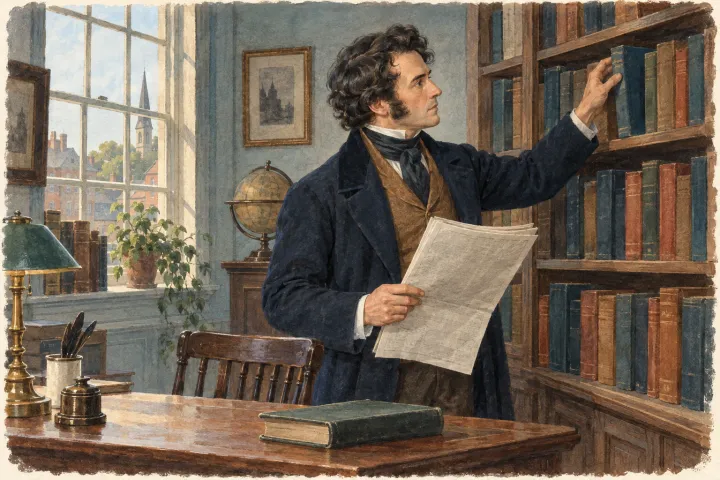
The Six Articles
An imagined reader checking a report’s source. The original Moon articles and journal pages are not reproduced here.
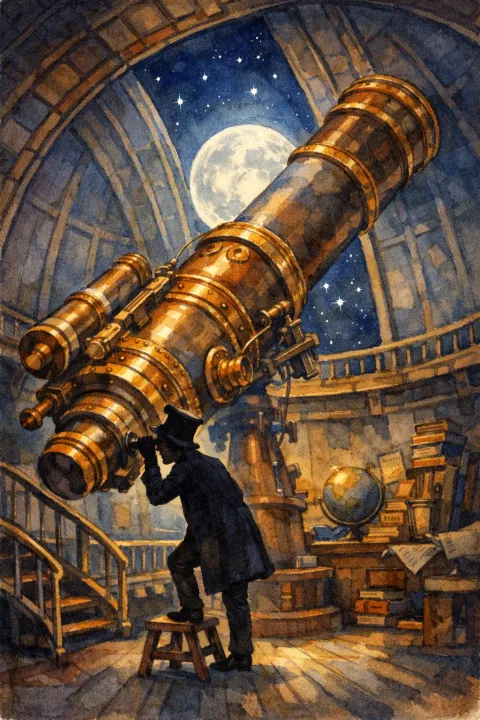
The Impossible Instrument
The articles described a telescope with a 24-foot mirror weighing nearly 15,000 pounds. It could magnify 42,000 times. Real astronomers knew this was impossible — but most readers weren't astronomers.
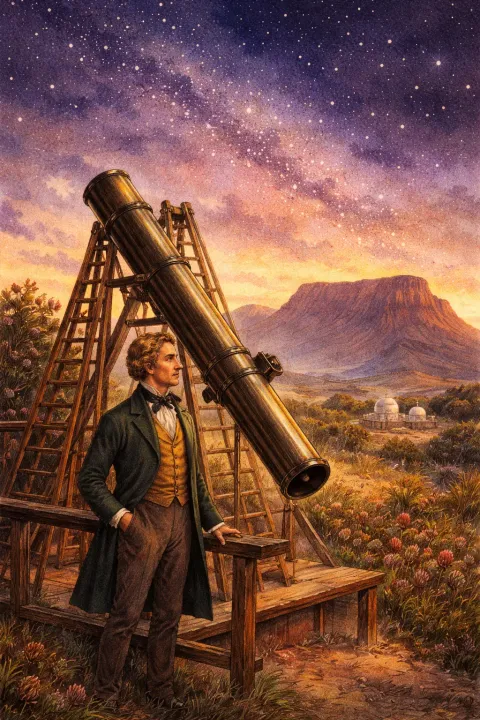
The Real Astronomer
Sir John Herschel really was in South Africa with a telescope. He was months away by ship and couldn't deny anything. His famous name made the story believable. He wasn't told until it was too late.
How the Story Unfolded
The Penny Paper
Benjamin Day founds the New York Sun, selling for just one penny. It becomes the first successful penny newspaper in America.
Herschel Sails South
Sir John Herschel arrives at the Cape of Good Hope to catalogue southern hemisphere stars. He is months away from New York by ship.
The First Article
The Sun publishes the first article claiming Herschel has discovered life on the Moon. New York goes wild. Circulation begins to soar.
The Bat-Men
The fourth article describes Vespertilio-homo — bat-winged humanoids living on the Moon. The Sun becomes the best-selling newspaper in the world.
The Rivals Investigate
Reporters from the Journal of Commerce discover that no original source articles exist. The hoax begins to unravel.
The Non-Retraction
The Sun publishes a vague column acknowledging the articles "might" be a hoax — but never officially retracts them.
Herschel Finds Out
Herschel returns to England and learns of the hoax. He is initially amused, then annoyed that his real discoveries have been overshadowed.
The People in This Story
Richard Adams Locke
An English journalist at the New York Sun. He wrote all six articles. Clever, educated, and a gifted storyteller. He may have intended it as satire — but the joke got out of hand.
Benjamin Day
Founder of the New York Sun. He needed sensational stories to sell papers. Whether he knew the articles were fake from the start is still debated — but he never stopped the presses.
Sir John Herschel
One of the world's most respected astronomers. His name was used without permission. He was thousands of miles away and couldn't deny anything. He later called the hoax "too bad."
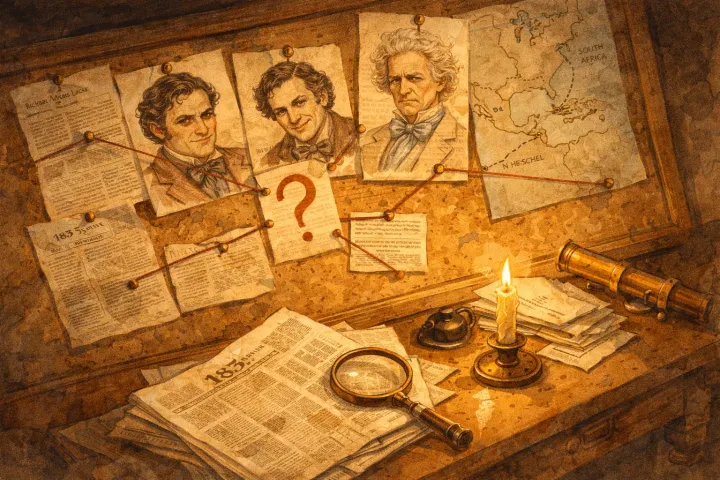
The Question That Remains
The Great Moon Hoax was exposed. Locke admitted it. The bat-men were never real. But the hoax worked because three things came together: a clever writer, a newspaper that wanted sales more than truth, and readers who didn't ask hard enough questions.
Those three ingredients haven't gone away. In an age of social media and viral misinformation, the Great Moon Hoax feels more relevant than ever.
Read the full book to investigate the key clues and competing explanations — then decide who was really to blame.
Get the Full Book
The complete Moon Hoax mystery. 9 chapters of evidence, theories, and a question only you can answer.
Part of the Hoaxes Volume
From fake fossils to trick photographs, we investigate the greatest hoaxes in history — and ask how clever people were fooled for so long.
See all books in this volume →Keep investigating
Check the evidence
What the evidence supports
The New York Sun printed six invented reports about life on the Moon in 1835. They borrowed the appearance of scientific reporting.
Where to be careful
A historical newspaper is evidence of what was published, not automatic proof that the reported event happened.
Explore the sources
These selected sources support this guide and offer further reading. Some are written for adults; explore them with a parent or teacher.
The story and illustrations are modern retellings. Imagined scene details are not historical evidence. These sources are a starting point, not citations for every narrative detail.
Evidence guide reviewed 8 September 2026.