
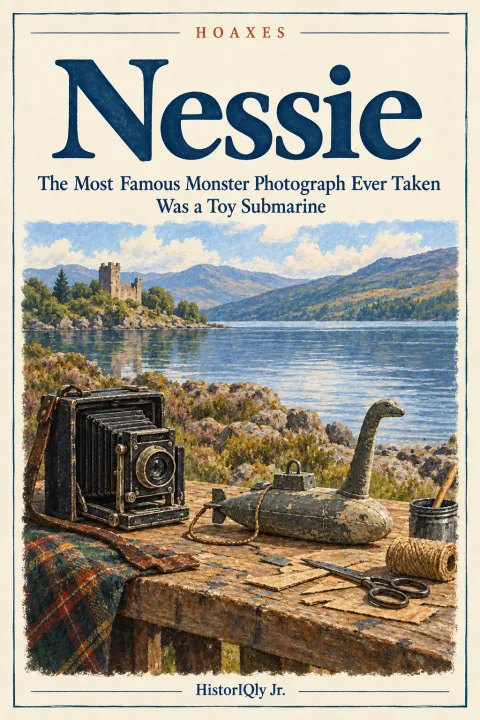
Nessie
The Most Famous Monster Photograph Ever Taken Was a Toy Submarine
In April 1934, a blurry photograph appeared in the Daily Mail showing something rising from the dark waters of Loch Ness. A long neck. A small head. The photographer was a respected London surgeon who asked to remain anonymous.
The world believed it for sixty years. Scientists launched expeditions. Sonar teams swept the loch. Millions of people visited Scotland hoping for a glimpse of the monster.
It was a toy submarine with a sculpted head, built from plastic wood in a workshop and photographed in shallow water. The whole model was barely a foot tall.
1934
Marmaduke "Duke" Wetherell — a big game hunter humiliated by the Daily Mail — built a fake monster from a toy submarine and a blob of sculpted putty, then recruited a London surgeon to present the photograph as his own.
~1 foot
The sculpted head and neck, mounted on a 14-inch toy submarine.
60 years
From 1934 to 1994, when the confession was made public.
£100
What the Daily Mail paid Wilson for the photograph — a large sum in 1934.
The Evidence

An Imagined Newspaper Reader
An imagined newspaper reader. The original 1934 photograph and newspaper page are not reproduced in this scene.
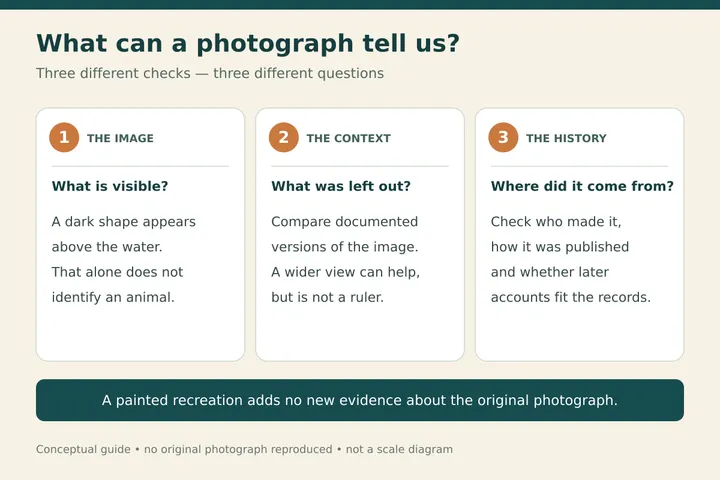
Check the Image’s Context
A wider view can reveal context that a crop leaves out. But a distant shoreline alone does not give the object a reliable size. This guide separates the picture, its framing and its reported history; it does not reproduce the original photograph.
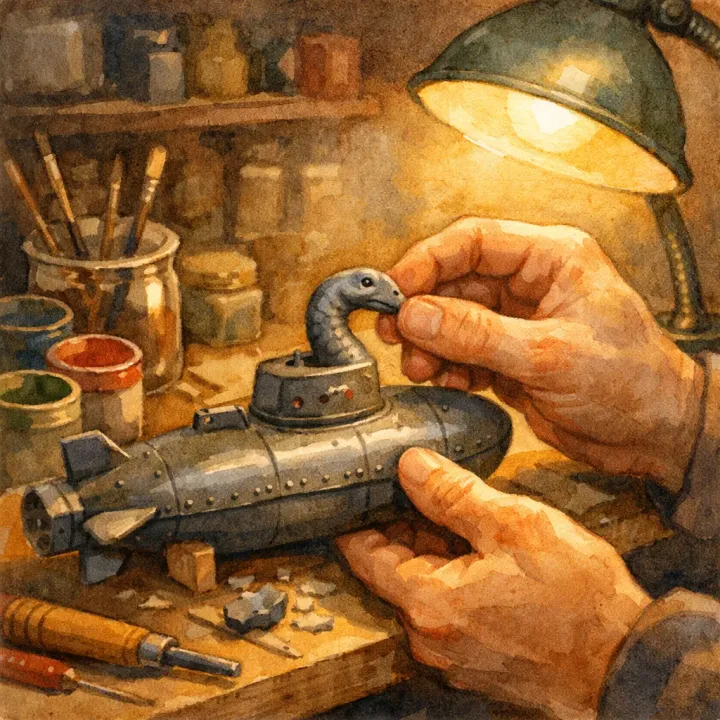
The Toy Submarine
A clockwork toy submarine from Woolworths, about 14 inches long, with a sculpted head and neck made from plastic wood. Painted grey. The model was sunk by Wetherell's foot when a water bailiff approached.
How the Hoax Unfolded
The Road
The new A82 road along Loch Ness gives thousands of motorists their first clear view of the water. Monster sightings begin almost immediately.
The Hunter
The Daily Mail sends big game hunter Marmaduke Wetherell to Loch Ness. He reports finding enormous footprints — which turn out to be made with a dried hippo foot.
The Humiliation
The Natural History Museum exposes the footprints as fakes. The Daily Mail publicly mocks Wetherell. His reputation is destroyed.
The Plot
Furious, Wetherell tells his son: "We'll give them their monster." His stepson Christian Spurling builds the model. His son Ian buys a toy submarine from Woolworths.
The Photograph
The model is photographed in shallow water at Loch Ness. The plates are passed to surgeon Robert Wilson, who sells the image to the Daily Mail for £100.
The Ignored Confession
Ian Wetherell tells the Sunday Telegraph the full truth. The article is buried in a corner of the paper. Nobody notices.
The Exposure
Researchers David Martin and Alastair Boyd publish Christian Spurling's deathbed confession. After sixty years, the most famous monster photograph is finally exposed.
The People in This Story
Marmaduke Wetherell
A big game hunter and filmmaker, hired by the Daily Mail to find the monster. After his humiliation over fake footprints, he plotted revenge — and created the most famous monster photograph in history.
Robert Kenneth Wilson
A Fellow of the Royal College of Surgeons of Edinburgh whose name gave the photograph its authority. He never claimed it was a monster — and never admitted it was a hoax. He died in 1969 without confessing.
Christian Spurling
Wetherell's stepson, a skilled sculptor who built the fake monster from a toy submarine and plastic wood. He confessed everything in his late eighties — and died in November 1993.
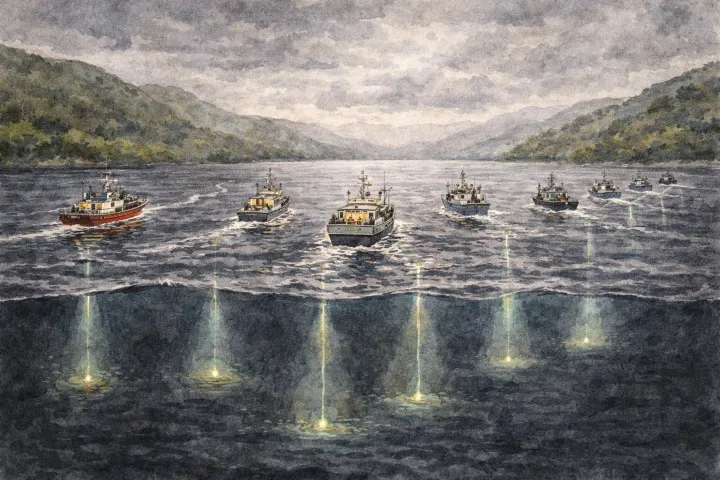
The Question That Remains
The photograph was fake. The surgeon lied. The model was a toy. But the searches continued anyway — sonar sweeps, DNA studies, volunteer watches.
Was Wetherell a clever con artist who tricked the world for revenge — or did the world trick itself, because millions of people wanted to believe in a monster more than they wanted to examine the evidence?
Read the full book to investigate the key clues and competing explanations — then decide for yourself.
Get the Full Book
The complete Nessie mystery. 9 chapters of evidence, theories, and a question only you can answer.
Part of the Hoaxes Volume
From fake fossils to trick photographs, we investigate the greatest hoaxes in history — and ask how clever people were fooled for so long.
See all books in this volume →Keep investigating
Check the evidence
What the evidence supports
The famous 1934 “surgeon’s photograph” is treated as a hoax by museum accounts.
Where to be careful
Exposing one picture does not identify every reported sighting. Equally, an unexplained sighting does not establish a new animal species.
Explore the sources
These selected sources support this guide and offer further reading. Some are written for adults; explore them with a parent or teacher.
The story and illustrations are modern retellings. Imagined scene details are not historical evidence. These sources are a starting point, not citations for every narrative detail.
Evidence guide reviewed 8 September 2026.