
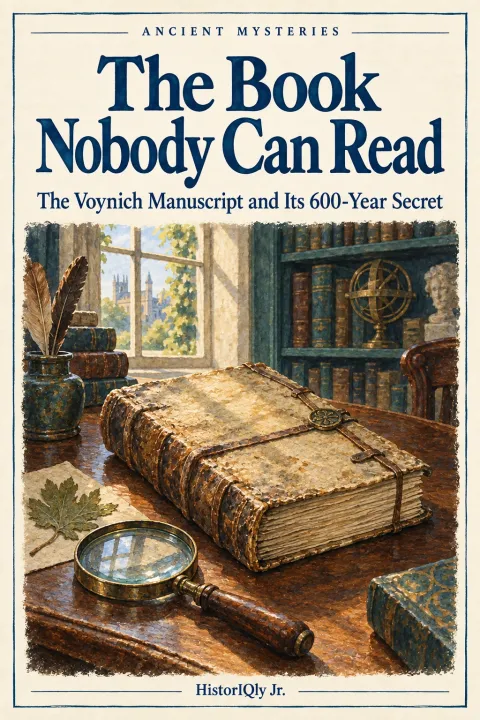
The Book Nobody Can Read
The Voynich Manuscript and Its 600-Year Secret
Wilfrid Voynich bought the manuscript from a Jesuit collection near Rome in 1912. Its pictures suggest plants, astronomy and bathing, but they do not translate the unfamiliar script. Those visible clues are where the investigation begins.
Many researchers have proposed readings. None has gained general acceptance; a convincing solution needs rules that other people can test.
It is one of the world’s best-known undeciphered books. Proposed translations have not won general acceptance, and researchers still debate the system behind its writing.
c. 1420
Radiocarbon dating places the parchment in 1404–1438. That dates the animal material, not the moment someone added the writing.
240
Including several large fold-out pages up to six times normal size.
600 ducats
A price reported in Marci’s letter. A historical payment has no single exact equivalent in today’s money.
0
No proposed complete reading has gained general acceptance.
The Evidence
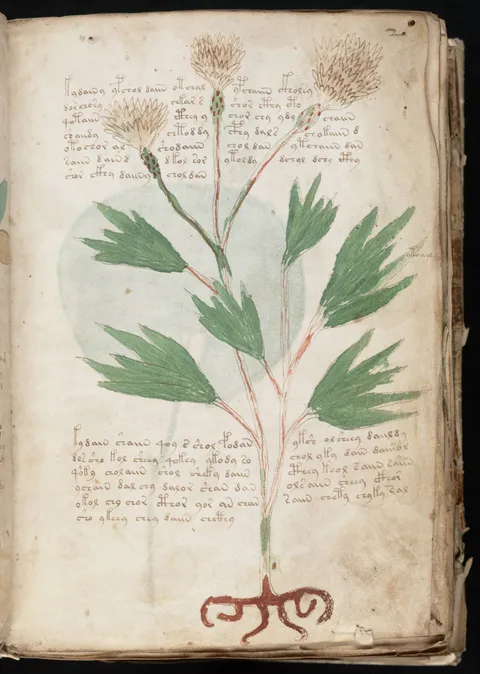
Studying the Actual Script
Folio 2r of the Voynich manuscript: an actual page with a plant drawing and undeciphered writing. The picture of a plant does not establish its species or the text’s meaning. Beinecke MS 408, Yale University; public-domain scan via Wikimedia Commons.
.jpg)
The manuscript contains repeated signs and word-like groups. Their patterns can be measured even while their meaning remains uncertain.
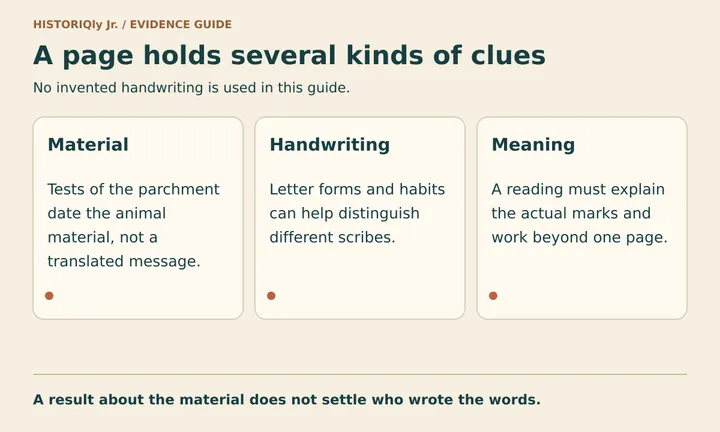
Kinds of Evidence
Three distinct kinds of evidence. Handwriting analysis requires the real pages; the five-scribe finding does not decipher their language.
Some statistical patterns resemble language, while others are unusual. Structure alone does not establish meaning; a proposed reading must work consistently.
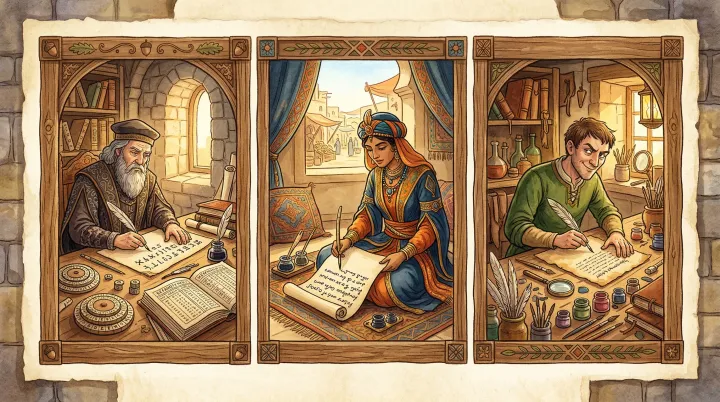
Who Made the Manuscript?
Three imagined makers illustrate broad possibilities, not identified authors. Clothing and appearance cannot establish a language, a code or a hoax.
The imagined makers are not identified authors. Disputed plant identifications have inspired theories about the manuscript’s origin, but unfamiliar drawings do not establish impossible plants or reveal who made the book.
Six Centuries of Mystery
The Manuscript Is Created
The parchment is dated to 1404–1438. Material studies and historical records must be combined to investigate when the manuscript was written.
Emperor Rudolf II
The manuscript reportedly enters the collection of Emperor Rudolf II of Bohemia, who pays 600 gold ducats — believing it was written by the medieval scholar Roger Bacon.
The Marci Letter
Johannes Marcus Marci sends the manuscript to scholar Athanasius Kircher in Rome, asking for help decoding it. It disappears into Jesuit collections for over 200 years.
Voynich's Discovery
Book dealer Wilfrid Voynich finds the manuscript in Villa Mondragone near Rome. He spends the rest of his life trying to decode it.
Friedman's Attempt
William Friedman’s team studies the manuscript without producing an accepted decipherment. Unsuccessful attempts can still contribute methods and observations.
Radiocarbon Dating
The tests support an early-fifteenth-century date for the parchment. They do not directly date the ink or identify the author.
The People in This Story
Wilfrid Voynich
A Polish book dealer and former revolutionary who found the manuscript in an Italian villa in 1912. He spent the rest of his life trying to decode it — and gave the mystery its name.
William Friedman
A leading American codebreaker whose team broke Japan’s PURPLE diplomatic cipher. His work on the manuscript did not produce an accepted reading.
Emperor Rudolf II
The Holy Roman Emperor who reportedly paid 600 gold ducats for the manuscript in the late 1500s. He believed it contained secret knowledge from the medieval scholar Roger Bacon.
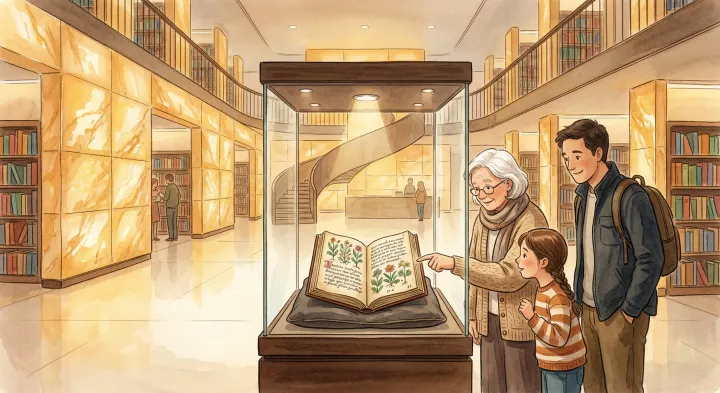
The Question That Remains
Research has identified useful features without settling the text’s meaning. Lisa Fagin Davis’s 2020 study distinguished five scribal hands, challenging the idea of one writer producing the whole manuscript.
What method could turn a proposed reading into a testable explanation? Try comparing its rules across several pages.
Read the full book to investigate the key clues and competing explanations — then decide for yourself.
Get the Full Book
The complete Voynich Manuscript mystery. 9 chapters exploring the evidence, proposed readings and how to test them.
Part of the Ancient Mysteries Volume
Desert drawings, undeciphered writing, and ingenious ancient machines. Discover what the evidence explains — and which questions remain open.
See all books in this volume →Keep investigating
Check the evidence
What the evidence supports
The Voynich manuscript survives at Yale, where readers can study digital images of its pages. Its text has no generally accepted decipherment.
Where to be careful
Dating parchment does not directly date every ink mark. A proposed reading must work consistently, not just produce a few suggestive words.
Explore the sources
These selected sources support this guide and offer further reading. Some are written for adults; explore them with a parent or teacher.
The story and illustrations are modern retellings. Imagined scene details are not historical evidence. These sources are a starting point, not citations for every narrative detail.
Evidence guide reviewed 8 September 2026.