
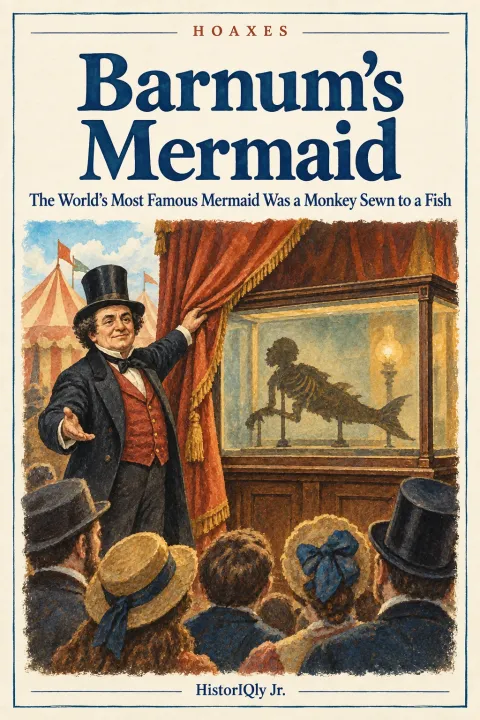
Barnum's Mermaid
The World's Most Famous Mermaid Was a Monkey Sewn to a Fish
In the summer of 1842, ten thousand pamphlets flooded New York City showing a beautiful mermaid from the South Pacific. A British scientist had brought it all the way from London. Crowds rushed to see it.
What they found was a shrivelled, three-foot creature with a monkey's screaming face and a fish tail. It was hideous. And it was the work of P. T. Barnum — the greatest showman who ever lived.
The mermaid was fake. The scientist was an actor. The newspaper stories were planted. And Barnum's profits more than doubled.
1842
P. T. Barnum leased a fake mermaid from Moses Kimball for $12.50 a week, invented a fake scientist named "Dr J. Griffin," planted stories in newspapers, and distributed 10,000 pamphlets showing a beautiful mermaid. The real specimen was a monkey sewn to a fish.
$6,000
About $150,000 today. Edes used stolen ship funds and never made a penny back.
10,000
Distributed across New York City — every one showing a beautiful mermaid.
3 feet
Smaller than a five-year-old child. Barnum called it "ugly" and "diminutive."
The Evidence
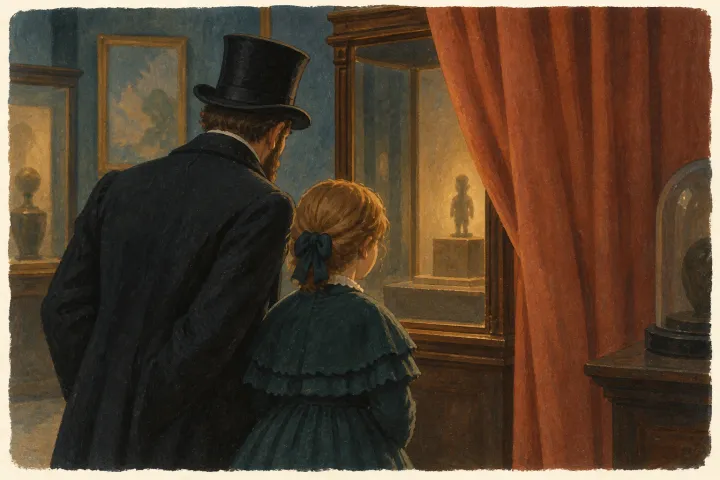
An Imagined Exhibition
An imagined display seen by visitors. The picture illustrates exhibition, not the anatomy, dimensions or surviving identity of Barnum’s object.
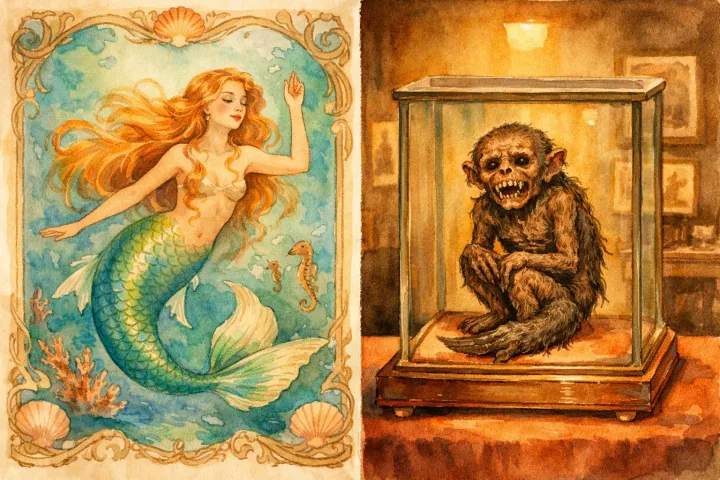
The Beautiful Lie
Barnum distributed 10,000 pamphlets showing a gorgeous, graceful mermaid — nothing like the shrivelled specimen. By the time visitors saw the real thing, they had already been convinced it was genuine.
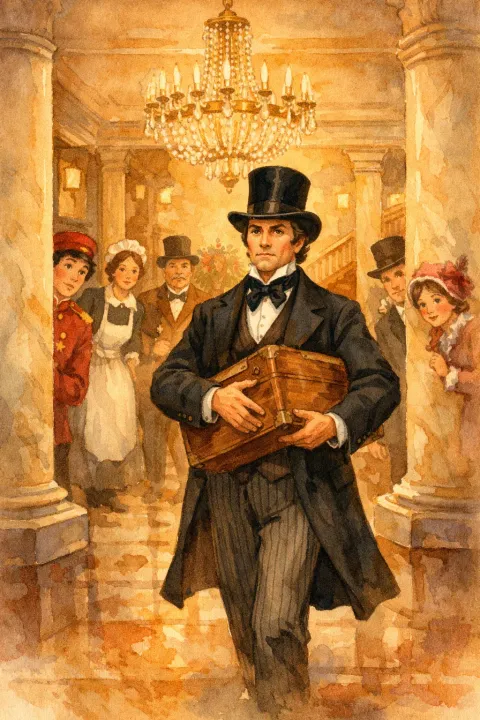
"Dr J. Griffin"
Barnum's associate Levi Lyman posed as a British scientist, gave lectures, and declared the mermaid genuine. He was not a scientist. He was not British. The "British Lyceum of Natural History" did not exist.
How the Hoax Unfolded
The Creation
Japanese fishermen create a ningyo — a fake mermaid made by sewing a monkey's upper body to a fish tail. It is one of many such objects made as traditional craft pieces.
The Purchase
Captain Samuel Barrett Edes sees the mermaid in Batavia (Jakarta) and buys it for $6,000 using money from his ship's expense account. The purchase places a large business sum at risk.
The Showman
Edes' son sells the mermaid to Moses Kimball, who leases it to P. T. Barnum for $12.50 a week. Barnum begins his marketing campaign.
"Dr Griffin" Arrives
Levi Lyman checks into a New York hotel as "Dr J. Griffin," a British scientist. Barnum distributes 10,000 pamphlets. The mermaid goes on display at Concert Hall on Broadway.
The Exhibition
The mermaid moves to Barnum's American Museum. Attendance triples. Profits more than double. Scientists argue. The public pours in. Barnum watches the money roll in.
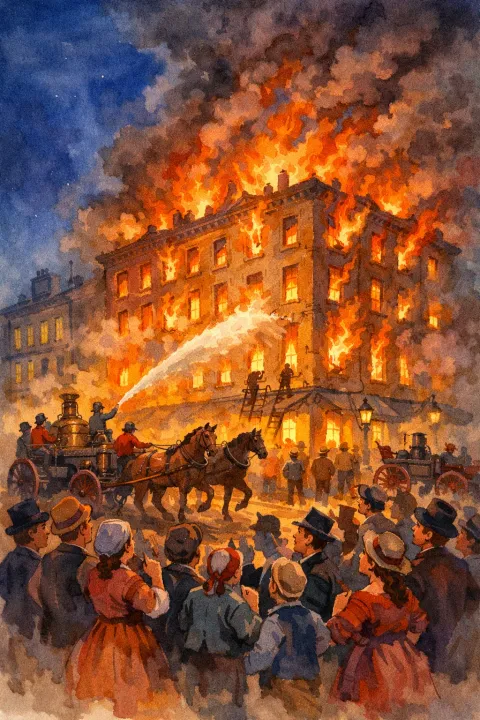
The Fire
Barnum's American Museum burns to the ground. Whether the mermaid was inside remains a mystery. It may have already been returned to Kimball in Boston.
The People in This Story
P. T. Barnum
America's most famous showman. He invented a fake scientist, planted newspaper stories, printed misleading pamphlets, and turned an ugly dried specimen into the sensation of 1842.
Samuel Barrett Edes
A sea captain who spent $6,000 of his employer's money to buy the mermaid in Batavia. He believed it was real. He tried to exhibit it in London, failed, and never made the fortune he dreamed of.
Levi Lyman
Barnum's associate who posed as "Dr J. Griffin," a distinguished British scientist. He gave lectures, spoke to reporters, and convinced the public the mermaid was genuine.
The Question That Remains
Barnum never claimed the mermaid was real himself. He hired an actor to say it. He let the newspapers draw their own conclusions. He showed people an ugly specimen and let them believe what they wanted.
Was Barnum a dishonest con artist — or an entertainer who gave people exactly the excitement they were looking for?
Read the full book to investigate the key clues and competing explanations — then decide for yourself.
Get the Full Book
The complete Feejee Mermaid mystery. 9 chapters of evidence, theories, and a question only you can answer.
Part of the Hoaxes Volume
From fake fossils to trick photographs, we investigate the greatest hoaxes in history — and ask how clever people were fooled for so long.
See all books in this volume →Keep investigating
Check the evidence
What the evidence supports
Display “mermaids” were manufactured objects. Harvard’s example contains animal parts and modelling materials.
Where to be careful
Several such objects existed. A surviving museum mermaid should not automatically be identified as the exact object Barnum displayed.
Explore the sources
These selected sources support this guide and offer further reading. Some are written for adults; explore them with a parent or teacher.
The story and illustrations are modern retellings. Imagined scene details are not historical evidence. These sources are a starting point, not citations for every narrative detail.
Evidence guide reviewed 8 September 2026.