
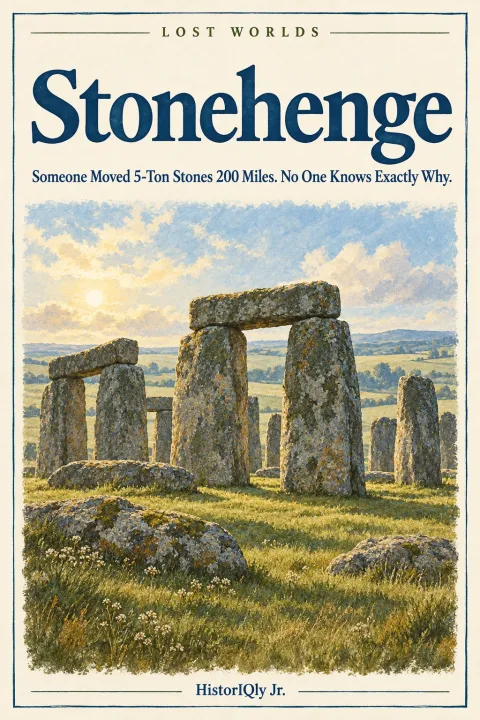
Stonehenge
Someone Moved 5-Ton Stones 200 Miles. No One Knows Exactly Why.
Five thousand years ago — five hundred years before the Egyptians built the Great Pyramid — people on a windswept plain in southern England began dragging enormous stones into a circle. They had no metal tools, no wheels, and no written language. They transported bluestones weighing up to five tons nearly two hundred miles from the mountains of Wales.
They shaped the stones with nothing but hammers made of rock. They carved woodworking joints into solid stone to lock the lintels in place. They aligned the whole structure with the sunrise on the longest day of the year.
Scientists know who built it, when, and roughly how. The mystery that remains — after five thousand years — is why.
~3000 BC
Construction began around 3000 BC and continued for over a thousand years. The great sarsen trilithons were raised around 2500 BC. Nobody alive when it was finished would have remembered when it began.
36+ tonnes
This unshaped sarsen stands outside the main circle; its original position is debated.
~200 miles
From the Preseli Hills in Wales to Salisbury Plain — without wheels or roads.
63+ people
Cremated remains buried in the Aubrey Holes over roughly 500 years.
The Evidence
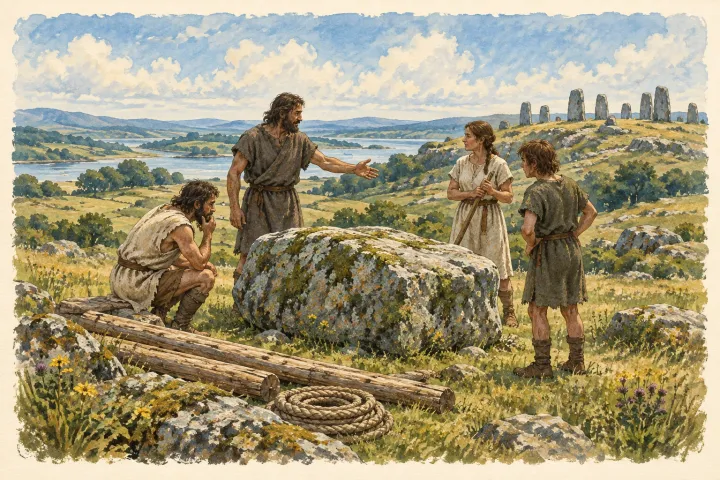
Stones from Wales
In 1923, geologist H.H. Thomas proved the bluestones came from the Preseli Hills — nearly 200 miles away. Later research investigated proposed Welsh quarries. In 2024, the separate Altar Stone was linked to north-east Scotland; routes remain uncertain.
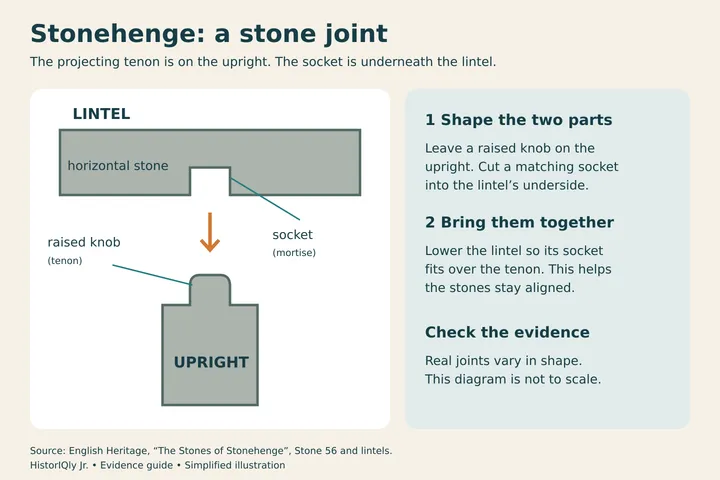
Mortise and Tenon
The lintels are locked onto the uprights using woodworking joints carved into solid stone. A raised knob on each pillar fits into a matching hole in the lintel — every one shaped by hand with stone hammers.
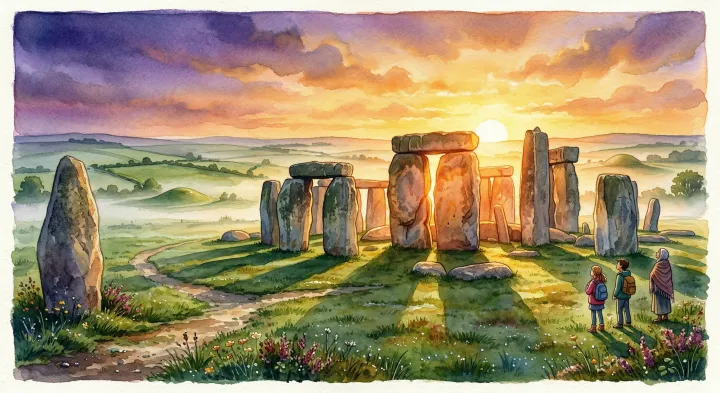
The Solstice Sunrise
The main axis of Stonehenge points directly at the midsummer sunrise and the midwinter sunset. The alignment is precise to within a fraction of a degree — and has not changed in five thousand years.
Five Thousand Years of Mystery
The First Phase
A circular ditch, bank, and 56 evenly spaced holes (the Aubrey Holes) are dug on Salisbury Plain. Cremation burials begin — at least 63 individuals over the next 500 years.
The Bluestones Arrive
About 80 bluestones — each weighing 2–5 tons — are transported nearly 200 miles from the Preseli Hills in Wales. They are erected in a circle inside the henge.
The Great Trilithons
Massive sarsen stones — some weighing tens of tonnes — are dragged from the West Woods, 15 miles north. They are raised upright and capped with lintels using mortise and tenon joints. The iconic Stonehenge takes shape.
The Merlin Legend
Geoffrey of Monmouth writes that the wizard Merlin magically transported the stones from Ireland. The story is widely believed for centuries.
The Druid Theory
William Stukeley makes detailed surveys and links Stonehenge to the Druids. The romantic image sticks — despite the Druids living 2,000+ years after it was built.
Stones Traced to Wales
Geologist H.H. Thomas identifies the bluestones as coming from the Preseli Hills — nearly 200 miles away. The question of how they were transported becomes one of archaeology's greatest puzzles.
The Riverside Project
Mike Parker Pearson discovers Durrington Walls — a massive Neolithic settlement 2 miles from Stonehenge with hundreds of houses and feasting pits. He proposes Stonehenge was a "domain of the dead."
The Welsh Quarries
Researchers find the exact bluestone quarry sites at Craig Rhos-y-felin and Carn Goedog. They also discover a dismantled stone circle at Waun Mawn — the same diameter as Stonehenge's ditch.
The People in This Story
H.H. Thomas
In 1923, Herbert Henry Thomas proved that the bluestones came from the Preseli Hills in Wales — nearly 200 miles away. His discovery transformed the mystery of Stonehenge from "who built it?" to "why would anyone move stones that far?"
Geoffrey of Monmouth
In 1136, this Welsh cleric wrote that the wizard Merlin transported the stones from Ireland by magic. His legend dominated for centuries — and contained a surprising kernel of truth: the stones really did come from far away.
Mike Parker Pearson
Led the Stonehenge Riverside Project (2003–2009). Discovered the settlement at Durrington Walls and proposed that Stonehenge was a "domain of the dead" — connected to the living world by water and processional roads.
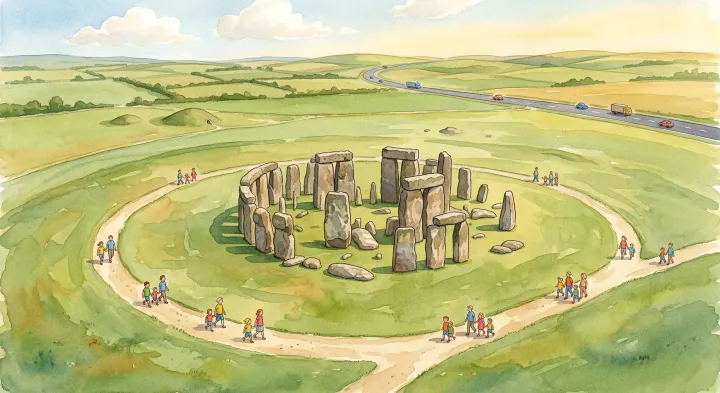
The Question That Remains
Scientists know who built Stonehenge, when it was built, where the stones came from, and roughly how they were moved. The one thing they cannot agree on is why.
Was it a temple to the dead? An astronomical observatory? A healing centre? A monument of unification? Or something nobody has thought of yet?
Read the full book to investigate the key clues and competing explanations — then decide for yourself.
Get the Full Book
The complete Stonehenge mystery. 9 chapters of evidence, theories, and a question only you can answer.
Part of the Lost Worlds Volume
Ancient cities, remarkable structures, and the communities who built them. Explore the evidence and the living histories behind the ruins.
See all books in this volume →Keep investigating
Check the evidence
What the evidence supports
Stonehenge was built and changed over many centuries. Its stones came from different regions.
Where to be careful
The 2024 Altar Stone research points to north-east Scotland. Identifying where a stone came from does not establish its transport route or ceremonial purpose.
Explore the sources
These selected sources support this guide and offer further reading. Some are written for adults; explore them with a parent or teacher.
The story and illustrations are modern retellings. Imagined scene details are not historical evidence. These sources are a starting point, not citations for every narrative detail.
Evidence guide reviewed 8 September 2026.