
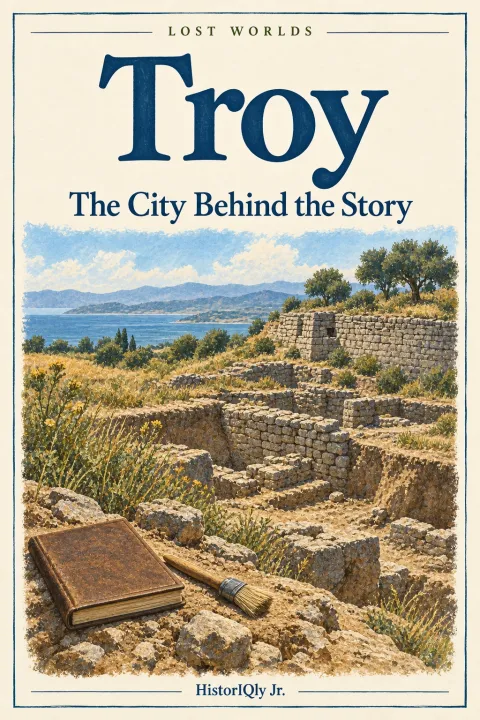
Troy
The City Behind the Story
Ancient visitors knew Troy as a real place, while later scholars debated its location and the historical basis of its epic stories. Then Heinrich Schliemann, a German businessman with no archaeological training, used Homer's Iliad as a treasure map and found a real city buried in a hillside in Turkey.
He also found gold — a dazzling hoard he named "Priam's Treasure." Newspapers went wild. The world believed. But Schliemann had dug right through the city he was looking for, identified the wrong layer, and lied about key details of his discovery.
The city was real. The gold was real. But was the war real? That question is still unanswered.
1873
Heinrich Schliemann — a self-taught archaeologist and former merchant — excavated the hill of Hisarlik in Turkey and found gold, silver, and bronze objects he called "Priam's Treasure." He was convinced he had found Homer's Troy.
9 Cities
Nine settlements stacked on top of each other over 3,000 years.
15,700 lines
Homer's Iliad — memorised and recited for centuries before being written down.
~1180 BC
A burned destruction layer and a proposed setting for a historical conflict; it does not identify Homer’s war.
The Evidence
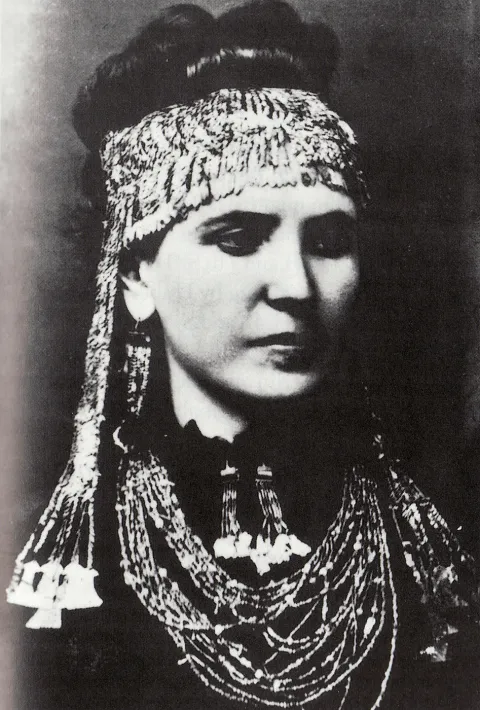
Priam's Treasure
Historical photograph of Sophia Schliemann wearing jewellery from Treasure A, around 1873. Wikimedia Commons, public domain.

Gold earrings, bracelets, a golden headdress, silver cups, and bronze weapons — found by Schliemann in Troy II. He named them after King Priam, but they date to roughly 2550–2300 BC, far earlier than the usual proposed setting for Homer’s war.
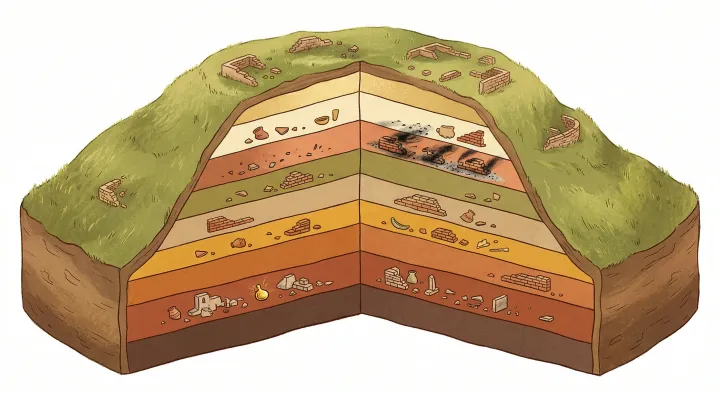
Nine Cities Deep
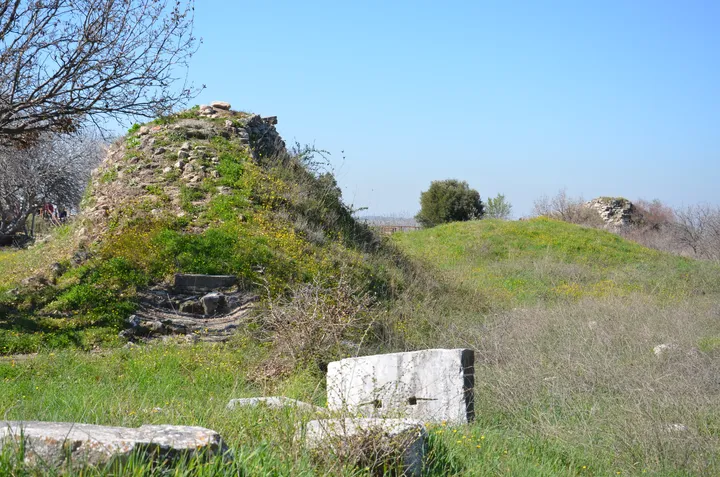
Hisarlik contains nine major settlement layers spanning 3,000 years. Schliemann dug through the layer matching Homer's timeframe (Troy VIIa) to reach one that was far too old (Troy II). He found gold — but in the wrong city.
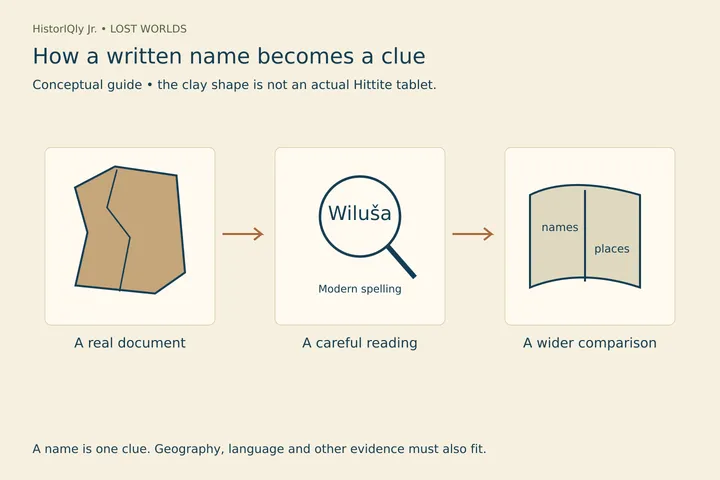
The Hittite Connection
Ancient Hittite clay tablets mention a place called "Wilusa" (possibly Troy/Ilion) and a people called "Ahhiyawa" (possibly Homer's Achaeans/Greeks) — with diplomatic conflicts between them at the right time period.
From Poem to Proof
The Poem
Homer composes The Iliad, describing a war at Troy roughly 400 years before his own time. The poem is memorised and recited for centuries before being written down.
Calvert's Discovery
British diplomat Frank Calvert buys part of the hill of Hisarlik in Turkey. He studies the landscape and becomes convinced it is the site of ancient Troy.
Schliemann Digs
Heinrich Schliemann begins excavating at Hisarlik on Calvert's advice. He cuts enormous trenches through the mound, hiring over a hundred workers.
"Priam's Treasure"
Schliemann discovers a hoard of gold, silver, and bronze objects. He names it after King Priam and declares he has found Homer's Troy. He smuggles the treasure out of Turkey.
The Right Layer
American archaeologist Carl Blegen identifies Troy VIIa — destroyed by fire around 1180 BC — as the best candidate for Homer's Troy. Schliemann had dug right through it.
The Bigger City
Manfred Korfmann's excavations reveal a large lower city beyond the citadel walls. Troy was far bigger and more important than anyone had realised.
The People in This Story
Heinrich Schliemann
A German businessman who retired wealthy and devoted the rest of his life to finding Troy. He found real gold and real cities — but identified the wrong layer, destroyed crucial evidence, and lied about key details.
Frank Calvert
A British diplomat who owned part of Hisarlik and identified it as Troy before Schliemann arrived. He guided Schliemann to the right hill but received almost no credit for over a century.
Carl Blegen
An American archaeologist from the University of Cincinnati who excavated Troy in the 1930s. He identified Troy VIIa — destroyed by fire around 1180 BC — as the most likely candidate for Homer's city.

The Question That Remains
Troy was real. The gold was real. A destruction layer belongs broadly to the period of Trojan War traditions, but does not identify the attackers or establish the events in Homer.
But did Homer preserve the memory of a real war — or did he create such a powerful story that people went looking for proof and found a city that had nothing to do with his poem?
Read the full book to investigate the key clues and competing explanations — then decide for yourself.
Get the Full Book
The complete Troy mystery. 9 chapters of evidence, theories, and a question only you can answer.
Part of the Lost Worlds Volume
Ancient cities, remarkable structures, and the communities who built them. Explore the evidence and the living histories behind the ruins.
See all books in this volume →Keep investigating
Check the evidence
What the evidence supports
The archaeological site at Hisarlık contains successive ancient settlements associated with Troy.
Where to be careful
A real city does not prove every event in Homer’s poetry. Destruction layers alone cannot identify a named hero or the cause of a war.
Explore the sources
These selected sources support this guide and offer further reading. Some are written for adults; explore them with a parent or teacher.
The story and illustrations are modern retellings. Imagined scene details are not historical evidence. These sources are a starting point, not citations for every narrative detail.
Evidence guide reviewed 8 September 2026.